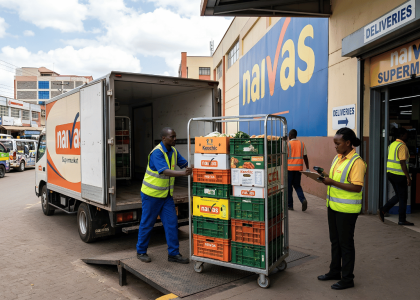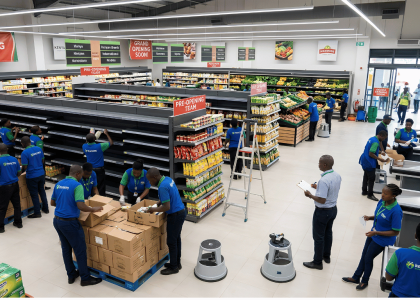
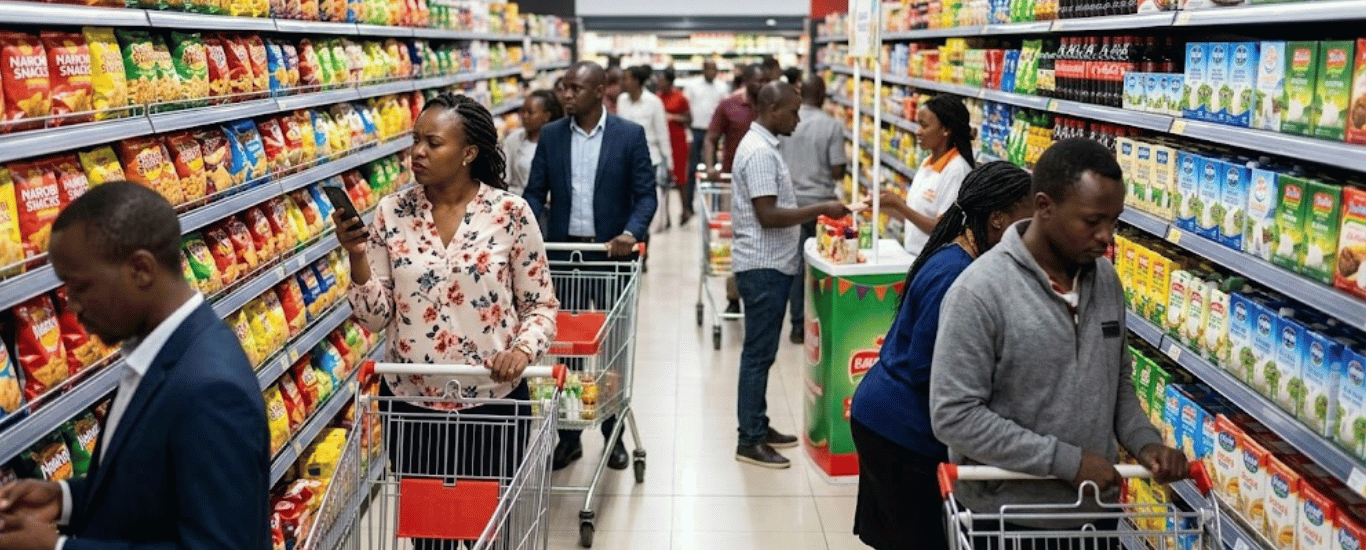
A supermarket can have the right location, competitive prices and thousands of products and still struggle to make money.
Why?
Because having products is not the same as selling products.
Walk into two supermarkets selling almost identical products and you may immediately notice the difference. One feels organized, easy to navigate and professionally managed. Products are visible, categories make sense, prices are clear and customers seem to move naturally through the store.
The other feels crowded. Popular products are difficult to find. Shelves are poorly arranged. Some prices are missing. Slow-moving products occupy valuable space while high-demand products disappear from shelves.
Both supermarkets may be selling the same brands.
But they are not creating the same shopping experience.
That is where merchandising comes in.
What Is Supermarket Merchandising?
Supermarket merchandising is the strategic process of selecting, organizing, displaying, pricing, positioning and managing products inside a retail store to maximize customer convenience and sales.
It goes far beyond putting products on shelves.
Effective merchandising answers important questions:
- Which products should the supermarket stock?
- How much shelf space should each category receive?
- Where should high-margin products be positioned?
- Which products should be placed together?
- How should shelves be organized?
- Where should promotional displays go?
- How should pricing information be displayed?
- How much stock should be maintained?
- Which products should receive premium visibility?
- How can slow-moving inventory be improved?
In other words, merchandising connects product selection with customer behavior and commercial performance.
And that makes it one of the most important operational functions in a supermarket.
Your Customers Are Making Decisions Before They Reach the Checkout
Here is a reality many supermarket owners underestimate:
Customers are constantly making purchasing decisions while walking through your store.
They are deciding what to notice, what to ignore, what to compare and what to buy.
A customer may enter intending to buy bread, milk and detergent.
But an attractive display, a strategically positioned product or a promotional offer can influence additional purchases.
This is called impulse purchasing.
The supermarket therefore isn’t simply responding to demand.
It is also shaping demand through its merchandising strategy.
Poor merchandising leaves money on the table.
Good merchandising captures more of the customer’s spending potential.
The Shelf Is Your Silent Salesperson
Your employees cannot personally explain every product to every customer.
Your shelves have to do some of that work.
A well-merchandised shelf communicates:
“This is where you find what you need.”
“These products belong together.”
“This product offers better value.”
“This is a popular option.”
“Here is another product you may need.”
That is why shelf organization matters.
For example, placing pasta next to pasta sauces can encourage complementary purchases.
Placing tea near sugar and related breakfast products can simplify the shopping journey.
Placing premium products at eye level can increase their visibility.
Placing promotional products in high-traffic areas can generate additional attention.
The principle is simple:
The easier you make it for customers to see, understand and access products, the easier you make it for them to buy.
Product Selection Comes Before Shelf Arrangement
This is where many new supermarkets make an expensive mistake.
They focus heavily on how products should be arranged before deciding what products should actually be stocked.
That reverses the process.
Before designing shelves, supermarket owners need to understand their market.
A supermarket in a high-income residential neighborhood may require a different assortment from one serving a middle-income estate.
A supermarket near offices may have strong demand for ready-to-eat meals, beverages and convenience products.
A supermarket near schools may experience higher demand for snacks, stationery and affordable household products.
A supermarket serving a densely populated residential area may require a strong assortment of everyday essentials.
Therefore, product selection should consider:
- Target customers
- Purchasing power
- Location
- Competitor assortment
- Product demand
- Seasonality
- Margins
- Shelf life
- Supplier reliability
- Available shelf space
- Purchase frequency
Stocking everything is not good merchandising.
Stocking the right products for your customers is.
Category Management Can Make or Break the Store
Imagine entering a supermarket and finding cooking oil next to toothpaste, cereal mixed with cleaning products and beverages scattered throughout the store.
You would probably become frustrated.
Customers expect logical category organization.
Common supermarket categories include:
- Beverages
- Dairy
- Bakery
- Fresh produce
- Meat and poultry
- Cereals
- Snacks
- Household cleaning products
- Personal care
- Baby products
- Stationery
- Pet products
- Toiletries
Within each category, products should also be organized logically.
For example, personal-care products can be grouped into hair care, oral care, body care and skincare.
Good category management reduces the mental effort required to shop.
And convenience is a competitive advantage.
Shelf Space Is Not Free
One of the most overlooked supermarket assets is shelf space.
Every shelf has an economic value.
If a product occupies a large amount of space but sells slowly, that space may be generating a poor return.
Conversely, a fast-moving product may deserve additional facings or better positioning.
Retailers should therefore think about metrics such as:
Sales per shelf space
Gross margin per square metre
Stock turnover
Sales velocity
Category contribution
The exact metric will depend on the business, but the principle remains the same:
Shelf space should earn its place.
This is why supermarkets should regularly review which products deserve more visibility and which products need to be reduced, repositioned or removed.
Eye Level Is Buying Level
There is a reason supermarkets pay attention to eye-level positioning.
Products positioned where customers naturally look are more likely to receive attention than products placed in difficult-to-see locations.
But this doesn’t mean every expensive product should automatically be placed at eye level.
The best positioning depends on the supermarket’s commercial strategy.
You may prioritize:
- High-margin products
- Strategic brands
- Private-label products
- New products
- Promotional products
- High-conversion products
The important point is to stop treating shelf positioning as random.
Positioning should have a commercial purpose.
Pricing Is Part of Merchandising
Imagine seeing an attractive product but having no idea how much it costs.
You may simply leave it.
Clear pricing is therefore part of the customer experience.
Supermarkets should ensure that:
- Prices are visible
- Shelf labels correspond with products
- Promotional prices are clearly communicated
- Discounts are genuine and easy to understand
- Price changes are reflected promptly
Pricing inconsistencies create customer frustration and can damage trust.
Merchandising and pricing therefore need to work together.
Promotions Can Either Move Stock or Destroy Margin
“Buy one, get one” signs everywhere do not automatically mean effective merchandising.
Promotions should have a purpose.
A supermarket might use promotions to:
- Increase trial of a new product
- Clear slow-moving inventory
- Increase basket size
- Attract price-sensitive customers
- Support supplier campaigns
- Drive seasonal purchases
But poorly managed promotions can create another problem: customers become trained to wait for discounts.
The supermarket then sacrifices margin without necessarily building loyalty.
Promotional merchandising should therefore be planned around commercial objectives, not simply around making the store look busy.
The Checkout Is More Than a Payment Point
The checkout area is one of the most valuable merchandising zones in a supermarket.
Why?
Because customers are already committed to purchasing.
Small, affordable and convenient products can perform well in this area because customers have time to notice them while waiting.
Depending on the store, these may include:
- Confectionery
- Small beverages
- Batteries
- Personal-care items
- Small household products
- Seasonal products
But once again, moderation matters.
If the checkout becomes overcrowded, the customer experience suffers.
Good merchandising creates opportunity without creating clutter.
Poor Merchandising Creates Hidden Costs
The consequences of poor merchandising are not always immediately obvious.
You may experience:
Dead Stock
Products remain on shelves for too long, tying up working capital.
Stockouts
Customers cannot find products they came specifically to buy.
Product Expiry
Poor rotation results in products reaching their expiry dates.
Shrinkage
Poor organization can make inventory control more difficult.
Lost Sales
Customers leave without buying because products are unavailable or difficult to find.
Lower Basket Size
Customers purchase fewer complementary products.
Poor Customer Experience
Confusing stores frustrate shoppers and encourage them to try competitors.
These are not merely merchandising problems.
They are profitability problems.
FIFO: A Simple Principle That Saves Money
For products with expiry dates, supermarkets should pay close attention to stock rotation.
The First In, First Out (FIFO) principle means older stock should generally be positioned to sell before newer stock.
For certain products, expiry-date management becomes even more critical.
Good merchandising therefore works together with inventory management.
The goal is not simply to make shelves look neat.
The goal is to make sure the right product is:
available, visible, correctly priced, properly positioned and sold before it becomes a problem.
Data Should Influence Your Merchandising Decisions
Modern supermarkets should not rely entirely on intuition.
Your point-of-sale system contains valuable information.
You should be asking:
- Which products sell fastest?
- Which categories generate the most revenue?
- Which products generate the highest margins?
- Which products frequently stock out?
- Which products are consistently slow-moving?
- Which promotions actually work?
- What happens to sales after repositioning a product?
This creates a feedback loop:
Merchandise → Measure → Analyze → Improve → Repeat
That is how merchandising becomes a continuous business process rather than a one-time shelf-arrangement exercise.
What Successful Supermarkets Do Differently
Successful supermarkets understand that the store itself is a marketing channel.
They use:
- Strategic product placement
- Clear category navigation
- Effective signage
- Attractive displays
- Planograms
- Promotional zones
- Cross-merchandising
- Stock rotation
- Data-driven assortment decisions
- Consistent pricing
- Regular shelf audits
They also understand something important:
The customer doesn’t experience your departments separately. They experience the supermarket as one business.
If the shelves are excellent but checkout service is terrible, the experience is poor.
If the store is attractive but products are constantly unavailable, the experience is poor.
If prices are competitive but customers cannot find what they need, the experience is poor.
Merchandising must therefore work alongside operations, customer service, procurement and inventory management.
Where Brina Solutions Comes In
This is an area where Brina Solutions can provide practical support to supermarkets and retail businesses.
We don’t approach merchandising as simply “arranging products nicely.”
Our approach starts with the commercial question:
How should this supermarket organize its products to serve its customers and improve performance?
Our retail and business advisory support can cover areas such as:
Product Assortment
Identifying the right categories and products based on the target market, location and commercial objectives.
Shelf Arrangement
Creating logical product groupings and shelf structures that make shopping easier and improve product visibility.
Planograms and Display Strategy
Determining how products should be positioned and how available shelf space can be used more effectively.
Pricing and Promotional Strategy
Supporting retailers in developing practical approaches to pricing, promotions and product visibility.
Supplier and Distributor Identification
Helping businesses identify and work with appropriate distributors and suppliers.
Stock and Inventory Guidance
Helping retailers think through stock levels, product movement, rotation and slow-moving inventory.
Retail Operations
Connecting merchandising with broader operating systems, staffing and customer experience.
This approach is particularly valuable for new supermarkets preparing to open, existing stores looking to improve performance, and retailers planning expansion.
You can learn more about our Business Advisory Services or explore our Marketing Services.
A Supermarket Is Not a Warehouse
This distinction deserves emphasis.
A warehouse is primarily designed to store products.
A supermarket is designed to sell them.
That means every element of the store should support the customer’s journey from:
Entry → Discovery → Consideration → Selection → Purchase → Checkout → Return
Merchandising influences almost every stage of that journey.
When done poorly, it creates friction.
When done well, it makes purchasing easier.
And easier purchasing can translate into stronger sales.
The Bottom Line: Your Shelves Are Part of Your Sales Strategy
Supermarket success is not determined by location or price alone.
It is determined by how effectively the business brings together product selection, pricing, inventory, merchandising, customer experience and execution.
Merchandising sits right at the center of that system.
A supermarket that understands its customers and deliberately designs its shelves around their behavior has a significant advantage over one that simply fills available space with products.
So before you ask:
“How many products should we stock?”
Ask:
“What products does our customer actually need, and how do we make it easier for them to buy?”
That is where serious retail merchandising begins.
Ready to Turn Your Supermarket Into a Better-Performing Retail Business?
If your supermarket is struggling with slow-moving products, poor shelf organization, stockouts, inconsistent pricing, low basket sizes or simply doesn’t know what products it should stock, don’t wait until the problem becomes expensive.
Brina Solutions can help you assess your retail setup, improve merchandising and build a more commercially effective supermarket operation.
Whether you are launching a new supermarket or improving an existing one, the right merchandising strategy can make the difference between shelves that simply hold products and shelves that actively support sales.
Don’t let valuable shelf space work against your business.
👉 Talk to Brina Solutions today about supermarket merchandising, retail advisory and market execution support.