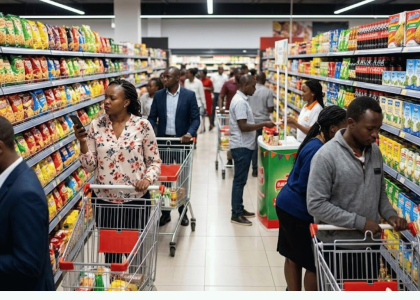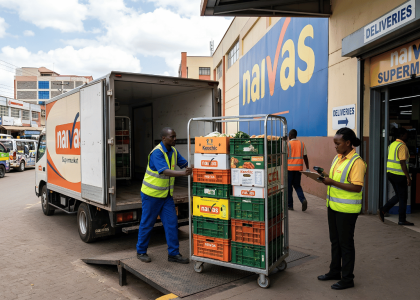
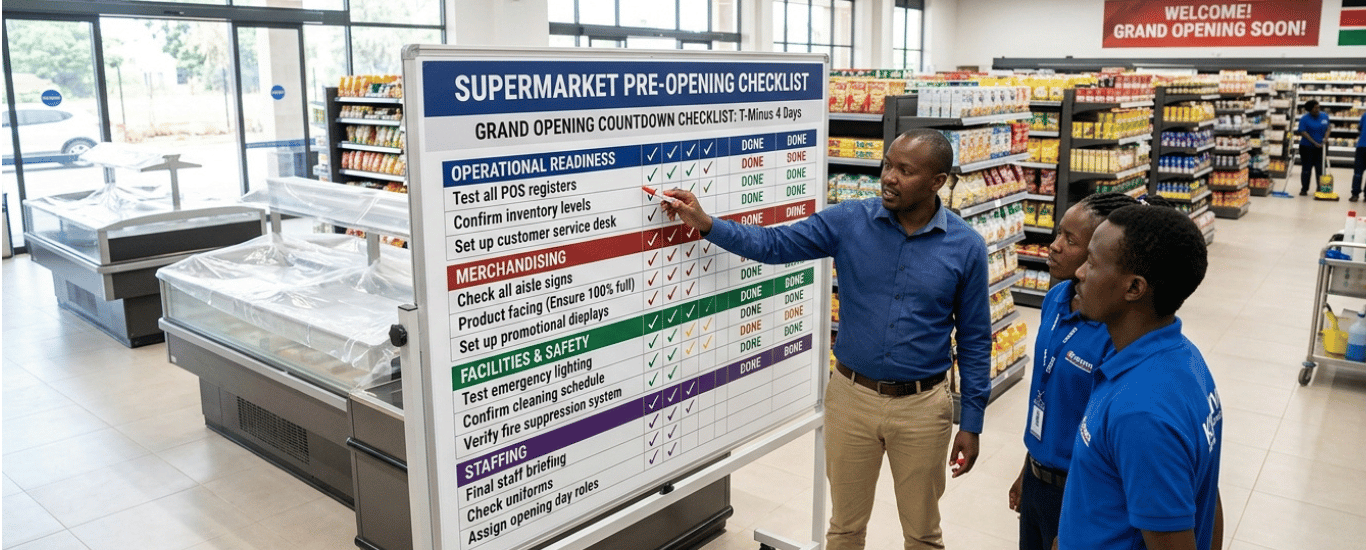
Opening a supermarket in Kenya is not simply a matter of renting premises, installing shelves and filling them with products.
It is a complex commercial project involving location, licensing, suppliers, product selection, merchandising, technology, staffing, marketing, security, inventory and customer experience.
And there is a dangerous misconception among new supermarket owners:
If the store looks ready, the business is ready.
Not necessarily.
A supermarket can have beautiful shelves but no reliable suppliers. It can have thousands of products but poor stock control. It can have a strong marketing campaign but employees who are not prepared to serve customers. It can even have a grand opening while critical systems are still being tested.
The purpose of a supermarket pre-opening checklist is to prevent these problems by ensuring that every critical part of the business is reviewed before customers walk through the doors.
This guide provides a practical framework for preparing a supermarket for opening in Kenya.
Why a Pre-Opening Checklist Matters
A supermarket opening involves dozens of activities happening simultaneously.
If one important task is missed, the consequences can spread across the business.
For example:
Supplier delays → Stock shortages → Empty shelves → Customer disappointment → Lost sales
Or:
Poor product selection → Slow-moving inventory → Cash tied up in stock → Reduced working capital
Or:
Untrained staff → Poor customer experience → Complaints → Negative reputation
A checklist gives management a single view of what must be completed, who is responsible and what remains outstanding.
It transforms the opening from a collection of activities into a controlled project.
Phase 1: Business and Market Planning
Before buying shelves or contacting suppliers, confirm that the business model makes sense.
Market Research
- Define the target customer
- Assess local population and purchasing patterns
- Identify major competitors
- Compare competitor pricing
- Identify underserved product categories
- Assess customer purchasing power
- Identify peak shopping periods
- Determine your competitive advantage
Don’t assume that a large population automatically means a successful supermarket.
What matters is whether there is sufficient demand for your particular offer.
A supermarket positioned near offices, for example, may need a different product mix from one serving a residential estate.
Business Model
- Define supermarket positioning
- Determine target market
- Establish pricing strategy
- Define expected customer volumes
- Estimate average basket size
- Develop sales projections
- Develop operating budget
- Establish working capital requirements
- Prepare cash-flow projections
Your projections should be realistic.
A spreadsheet that assumes customers will automatically arrive is not a business plan.
Phase 2: Location and Premises
The physical location will heavily influence the supermarket’s performance.
Check:
- Accessibility
- Visibility
- Parking
- Pedestrian traffic
- Vehicle traffic
- Nearby residential areas
- Nearby businesses and institutions
- Competitor locations
- Security
- Electricity availability
- Water supply
- Waste disposal arrangements
- Loading and delivery access
- Storage space
The internal layout matters too.
Confirm:
- Customer entrance
- Customer exit
- Checkout area
- Product aisles
- Storage area
- Receiving area
- Staff area
- Office space
- Toilets
- Emergency exits
The store should be designed around customer movement and operational efficiency, not simply around fitting in as many shelves as possible.
Phase 3: Licenses, Permits and Compliance
This is an area where you should not guess.
Requirements can vary depending on the county, location, premises and products being sold.
Before opening, confirm the applicable requirements with the relevant authorities and professionals.
Your checklist should include:
- Business registration completed
- Applicable county business permit obtained
- Fire safety requirements addressed
- Public health requirements addressed
- Food-related requirements addressed where applicable
- Signage requirements addressed
- Weights and measures requirements reviewed
- Employment obligations addressed
- Relevant product-specific licenses obtained
- Insurance reviewed
- Health and safety procedures established
For supermarkets selling specialized or regulated products, additional requirements may apply.
Do not treat compliance as an opening-day activity.
Start early enough to resolve issues before launch.
Phase 4: Store Design and Fixtures
The physical store should support the shopping experience.
Check:
- Shelving installed
- Gondolas installed
- Checkout counters installed
- Shopping baskets available
- Shopping carts available where appropriate
- Refrigeration equipment installed
- Freezers installed where required
- Display units installed
- Storage racks installed
- Signage installed
- Lighting completed
- Flooring completed
- Walls finished
- Store cleaned
Also test the durability and safety of fixtures.
A shelf collapsing after opening is not a minor inconvenience.
Phase 5: Product Selection
This is one of the most important stages.
Do not simply ask suppliers:
“What do you sell?”
Instead ask:
“What does our customer need?”
Build the product assortment around your target market.
Possible categories include:
- Groceries
- Beverages
- Dairy
- Bakery
- Fresh produce
- Meat and poultry
- Frozen foods
- Snacks
- Household cleaning
- Personal care
- Toiletries
- Baby products
- Stationery
- Pet products
- Household goods
For each product, consider:
Expected demand + margin + shelf life + supplier reliability + available space
More products do not automatically create a better supermarket.
The objective is to stock the right products.
Phase 6: Supplier Onboarding
Once your product assortment is established, build your supplier network.
For every supplier, check:
- Supplier identity verified
- Products confirmed
- Prices negotiated
- Payment terms agreed
- Minimum order quantities confirmed
- Delivery arrangements confirmed
- Returns policy agreed
- Damaged goods policy agreed
- Expiry policy agreed
- Promotional support discussed
- Supplier contacts documented
- Agreements documented
Don’t depend on one supplier for critical products where alternatives are available.
A backup supplier can protect you from unexpected disruptions.
For a deeper guide, read our Complete Guide to Supplier Onboarding for New Supermarkets.
Phase 7: Inventory and Stock Management
Your supermarket should have a clear inventory system before opening.
Check:
- Stock management system configured
- SKU codes created
- Barcodes entered
- Product categories configured
- Cost prices entered
- Selling prices entered
- Minimum stock levels established
- Reorder levels established
- Stock receiving procedure established
- Stock adjustment procedure established
- Stock count procedure established
- Damaged stock procedure established
- Expiry management procedure established
You should know what happens when stock arrives, not figure it out after opening.
Phase 8: Merchandising and Shelf Arrangement
Now turn inventory into a shopping experience.
Your merchandising checklist should include:
- Categories clearly defined
- Planogram or shelf plan developed
- Products grouped logically
- High-demand products positioned appropriately
- Complementary products cross-merchandised
- Promotional areas established
- Price labels installed
- Product facings checked
- Stock rotated
- Slow-moving products identified
- Shelves cleaned
- Displays checked
Remember:
A supermarket is not a warehouse.
Its shelves should help customers discover, compare and purchase products.
For more on this, see our guide on Why Merchandising Determines Whether Your Supermarket Succeeds.
Phase 9: Pricing
Before opening, every product should have a clearly defined selling price.
Check:
- Cost prices confirmed
- Selling prices approved
- Gross margins reviewed
- Promotional prices configured
- Shelf labels printed
- POS prices match shelf prices
- Discount rules configured
- Price approval process established
A pricing mistake can quickly destroy margin.
For example, if an item costing KES 90 is accidentally sold at KES 80, every sale creates a loss before other operating costs are considered.
Pricing needs both strategy and control.
Phase 10: POS and Technology
Never leave technology testing until opening morning.
Check:
- POS installed
- Barcode scanners working
- Receipt printers working
- Payment terminals working
- M-PESA payment process tested
- Card payment process tested
- Internet working
- Inventory integration tested
- User accounts created
- Staff access permissions configured
- CCTV operational
- Backup power available
- Data backup procedures established
Run simulated transactions.
Test:
- Normal purchases
- Discounts
- Returns
- Voids
- Multiple payment methods
- Barcode errors
- Product price changes
Your first customer should not be your system tester.
Phase 11: Staffing
Recruitment should happen early enough to allow proper preparation.
Check:
- Staffing requirements established
- Job descriptions prepared
- Employees recruited
- Contracts completed
- Identification and documentation completed
- Work schedules prepared
- Supervisors assigned
- Roles clarified
Depending on the supermarket, roles may include:
- Cashiers
- Shelf attendants
- Storekeepers
- Procurement staff
- Supervisors
- Customer service staff
- Security personnel
- Cleaners
- Butchery staff
- Bakery staff
- Fresh produce staff
- Management
Don’t hire based purely on headcount.
You need the right skills in the right positions.
Phase 12: Staff Training
Your staff are part of your customer experience.
Before opening, train them on:
- Customer service
- Product knowledge
- POS operation
- Cash handling
- Stock handling
- Product rotation
- Customer complaints
- Returns
- Store procedures
- Safety
- Security awareness
- Opening procedures
- Closing procedures
Run simulations.
For example:
Customer complains about a price difference. What does the cashier do?
A customer requests a product that is unavailable. What happens next?
A POS terminal stops working. Who is contacted?
Training should prepare employees for reality, not simply give them information.
Brina Solutions can support this through Corporate Training, including customer service, sales, communication, leadership and team development.
Phase 13: Standard Operating Procedures
Document the key processes before opening.
Your SOP library may include:
- Opening and closing
- Cash handling
- Stock receiving
- Stock replenishment
- Stock counting
- Returns
- Customer complaints
- Price changes
- Promotions
- Cleaning
- Security
- Emergency response
- Supplier deliveries
The purpose of SOPs is consistency.
You don’t want every employee inventing their own way of doing things.
Phase 14: Security
Retail stores handle cash, inventory and large numbers of customers.
Check:
- CCTV installed
- Cameras tested
- Security personnel engaged
- Alarm systems tested where applicable
- Emergency contacts available
- Cash handling controls established
- Key/access controls established
- Incident reporting process established
- Loss prevention procedures established
Security should cover both people and inventory.
Phase 15: Marketing and Pre-Opening Activation
Don’t open quietly and hope people notice.
Start building awareness before launch.
Your pre-opening marketing checklist can include:
- Store branding installed
- Exterior signage completed
- Google Business Profile prepared where applicable
- Social media pages updated
- Opening announcement prepared
- Local community awareness campaign launched
- Promotional offers prepared
- Digital advertising planned
- Influencer/community partnerships considered
- Opening-day communication prepared
- Photography/video content prepared
The campaign should reflect what the store can actually deliver.
If you advertise huge discounts but have limited stock, you may create more frustration than goodwill.
Phase 16: Soft Launch
Before the grand opening, conduct a controlled trial.
Invite a limited number of customers or operate at reduced capacity.
Observe:
- Customer movement
- Checkout queues
- Product availability
- Staff performance
- POS performance
- Pricing accuracy
- Customer questions
- Product visibility
- Cleanliness
- Security
Then fix the problems.
A soft launch is essentially a real-world stress test.
The Final 48-Hour Supermarket Readiness Check
Two days before opening, management should review every critical workstream.
Physical Store
- Store clean
- Lighting working
- Shelves secure
- Signage installed
- Customer areas clear
- Toilets operational
- Parking/access ready
Products
- Core assortment received
- Products correctly priced
- Shelves stocked
- Expiry dates checked
- Stock rotated
- Promotional displays installed
Staff
- Staff roster confirmed
- Training completed
- Uniforms/name tags ready
- Supervisors assigned
Systems
- POS tested
- M-PESA tested
- Card payments tested
- Internet working
- CCTV tested
- Backup power tested
Suppliers
- Key suppliers confirmed
- Outstanding deliveries tracked
- Emergency contacts available
Marketing
- Opening campaign active
- Signage installed
- Promotional materials ready
- Opening announcement scheduled
Management
- Opening procedures tested
- Emergency procedures understood
- Contact list available
- Escalation procedures established
The Biggest Mistakes New Supermarkets Make
Let’s be honest.
The biggest problem isn’t that supermarket owners don’t work hard.
They often work without sufficient coordination.
Common mistakes include:
Opening Before the Supply Chain Is Ready
The store opens, but important products are missing.
Overbuying Stock
Too much inventory consumes working capital and increases expiry risk.
Underestimating Training
Employees learn on the job while customers are watching.
Treating Merchandising as Decoration
Beautiful shelves don’t automatically produce sales.
Ignoring Data
Decisions are based on assumptions rather than actual customer behavior.
Starting Marketing Too Late
Customers don’t know the store exists.
Trying to Do Everything Internally
Management becomes overwhelmed coordinating suppliers, contractors, staff, marketing and procurement simultaneously.
That last mistake is particularly common.
Brina Solutions: Helping Businesses Get Retail Openings Right
Opening a supermarket requires multiple moving parts to work together.
This is where Brina Solutions can support business owners.
Our approach combines business advisory, retail execution, merchandising, supplier coordination, marketing and training to help businesses prepare for launch.
Depending on the project, our support can include:
- Market and business assessment
- Product selection
- Supplier identification and onboarding
- Procurement coordination
- Shelf arrangement
- Merchandising
- Pricing strategy
- Stock planning
- Retail SOPs
- Staff recruitment support
- Staff training
- Customer service training
- Pre-opening marketing
- Product activation
- Opening-day coordination
Rather than treating these as isolated activities, we help connect them into one coordinated retail opening project.
Explore our Business Advisory Services or Marketing Services to see how we support businesses through strategy and execution.
Your Supermarket Opening Should Be Planned, Not Improvised
A supermarket opening creates only one first impression.
Customers don’t know that the supplier delayed your products.
They don’t care that the POS technician arrived late.
They don’t know that your staff only received training yesterday.
They simply experience the store.
That is why preparation matters.
A successful supermarket opening should be the result of months of deliberate planning condensed into one coordinated launch.
And the checklist is your control mechanism.
Final Supermarket Pre-Opening Checklist
Before opening the doors, ask yourself:
Is the store legally ready?
Is the product assortment right for our customers?
Are our suppliers reliable and activated?
Is the inventory system working?
Are shelves properly merchandised?
Are prices correct?
Can customers pay without problems?
Are our employees trained?
Are our SOPs ready?
Is the store secure?
Does the marketing match our actual offer?
Have we tested the customer journey?
What happens if something goes wrong on opening day?
If you cannot confidently answer these questions, you’re not ready.
And that’s okay.
It is much better to discover that before opening than after customers arrive.
Ready to Open Your Supermarket?
Opening a supermarket is a significant investment. Don’t put that investment at risk because the final preparation was rushed or poorly coordinated.
Brina Solutions can help you move from concept to opening day through structured retail advisory, supplier coordination, product selection, merchandising, staff training and marketing support.
Whether you’re opening a new supermarket, expanding an existing retail business or restructuring an underperforming store, we can help you identify the gaps before they become expensive problems.
Your opening day should showcase your business not expose its weaknesses.
👉 Contact Brina Solutions today to discuss your supermarket pre-opening project and build a practical opening plan around your location, budget, target market and timeline.