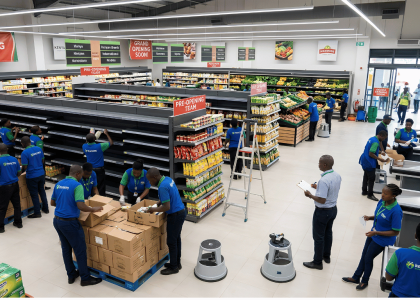
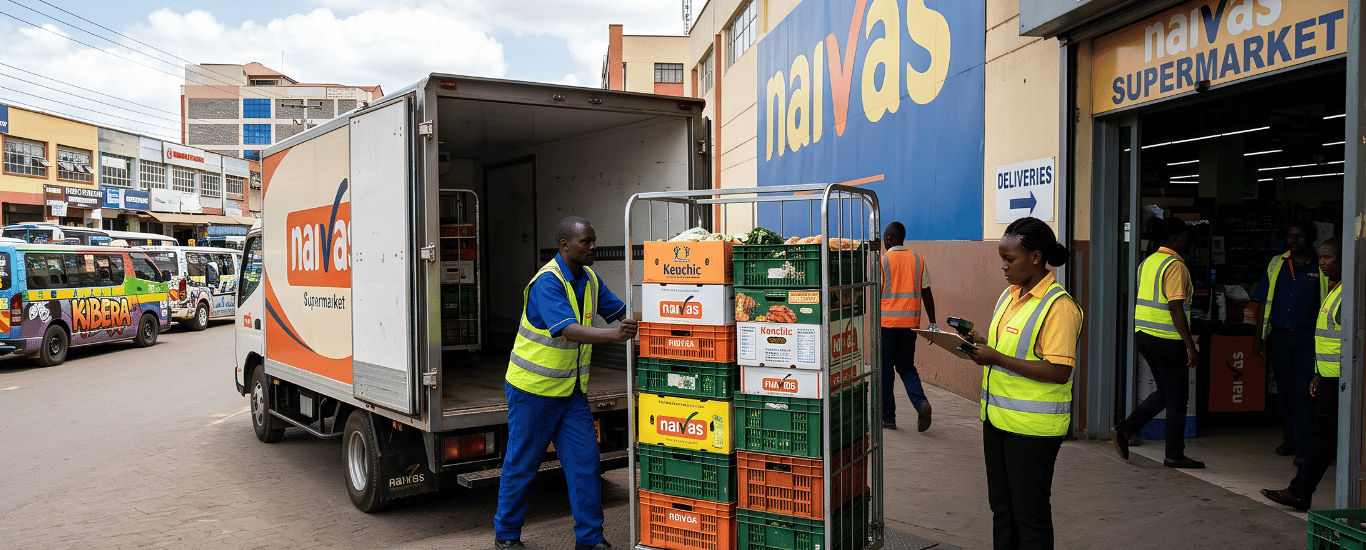
Opening a new supermarket is exciting but getting the shelves ready is where the real work begins.
You can have an excellent location, attractive branding, modern shelves and a strong marketing plan, but if you cannot consistently source the right products at the right price, your supermarket will struggle.
This is why supplier onboarding deserves serious attention before opening day.
Supplier onboarding is the structured process of identifying, evaluating, negotiating with, contracting, registering and establishing working relationships with suppliers who will provide the products and services your supermarket needs.
For a new supermarket, this process is much more than collecting supplier contacts.
It determines:
- What products you can stock
- How much you pay for those products
- Your margins
- Product availability
- Delivery reliability
- Payment terms
- Credit exposure
- Promotional opportunities
- Stock replenishment
- Long-term supplier relationships
In short, your supplier network becomes one of the foundations of your supermarket’s profitability.
And getting it wrong can be expensive.
Why Supplier Onboarding Can Make or Break a New Supermarket
Imagine opening your supermarket with 5,000 SKUs but discovering that several of your key suppliers cannot deliver consistently.
Customers walk in looking for their preferred brands.
They’re unavailable.
They come back another day.
Still unavailable.
Eventually, they develop a habit of shopping somewhere else.
That is how supermarkets lose customers not necessarily because they have poor prices, but because they cannot consistently provide what customers want.
On the other hand, a supermarket with well-managed suppliers can maintain better availability, negotiate better commercial terms and respond faster to changes in demand.
This is why supplier onboarding should begin before procurement starts filling the shelves.
Step 1: Know What Your Supermarket Actually Needs
One of the biggest mistakes new supermarkets make is approaching suppliers before deciding what they actually want to stock.
That creates confusion.
You may end up with hundreds of supplier contacts and still lack a clear product assortment.
Start by developing a product category and SKU plan.
Your categories might include:
- Food and grocery
- Beverages
- Dairy
- Bakery
- Fresh produce
- Meat and poultry
- Household cleaning products
- Personal care
- Toiletries
- Baby products
- Stationery
- Pet products
- Confectionery
- Frozen products
- Household goods
The exact assortment should depend on your location, target market, store size and positioning.
A supermarket serving a high-income residential area will not necessarily require the same product mix as a neighborhood supermarket serving a price-sensitive market.
Supplier onboarding should therefore follow your retail strategy, not happen independently of it.
Step 2: Build a Supplier Shortlist
Once the product categories are established, begin identifying potential suppliers.
Do not rely on a single supplier for every category.
A strong supplier base may include:
Manufacturers
Buying directly from manufacturers can provide competitive pricing, promotional support and access to established brands.
Authorized Distributors
Distributors can offer access to multiple brands and may provide more convenient delivery arrangements.
Wholesalers
Wholesalers can be useful where direct manufacturer relationships are impractical or minimum order quantities are too high.
Local Producers
Local suppliers can be particularly valuable for fresh produce, bakery products and locally manufactured goods.
Specialized Suppliers
Some categories require specialized suppliers because of technical, regulatory, storage or handling requirements.
The goal is not to collect the largest number of suppliers.
The goal is to build a reliable supplier ecosystem.
Step 3: Evaluate Suppliers Before You Commit
A supplier may offer an attractive price and still be a poor partner.
Why?
Because price is only one part of the equation.
A proper supplier evaluation should consider:
| Factor | What to Assess |
|---|---|
| Price | Unit cost and overall competitiveness |
| Quality | Product quality and consistency |
| Availability | Ability to maintain supply |
| Delivery | Lead times and reliability |
| Payment terms | Cash, credit and credit period |
| Minimum order | Required purchase quantities |
| Returns | Damaged, expired or defective products |
| Promotions | Discounts, rebates and campaigns |
| Territory | Distribution coverage |
| Support | Sales representatives and account management |
| Compliance | Relevant legal and regulatory requirements |
You can develop a supplier scoring system to make decisions more objective.
For example:
Supplier Score = Price + Quality + Availability + Delivery + Terms + Support
You can assign different weights to each factor depending on how important it is to your supermarket.
Step 4: Verify Supplier Legitimacy
This step should never be skipped.
A new supermarket can become vulnerable if it starts doing business with unreliable or improperly documented suppliers.
Depending on the supplier and product category, verification may include:
- Business registration details
- Tax information
- Relevant licenses
- Product certifications
- Manufacturer authorization
- Physical business address
- Banking details
- References
- Product documentation
- Regulatory compliance
For regulated categories, additional requirements may apply.
The principle is simple:
Do not put a product on your shelves simply because someone offered you a good price.
Know who you are buying from.
Step 5: Negotiate Commercial Terms
This is where supplier onboarding directly affects profitability.
Don’t focus only on the supplier’s quoted price.
Negotiate the complete commercial relationship.
Important issues include:
Purchase Price
What is your actual landed cost?
Payment Terms
Can you negotiate credit?
For example:
- Cash on delivery
- 7 days
- 14 days
- 30 days
- Longer negotiated terms
Credit terms can significantly affect a supermarket’s cash flow.
Minimum Order Quantities
A supplier offering a low price may require quantities that create excessive inventory.
Delivery
Who pays for delivery?
How frequently can they deliver?
What happens when delivery is late?
Returns
What happens with:
- Damaged goods?
- Expired products?
- Incorrect deliveries?
- Slow-moving stock?
- Short deliveries?
Promotions
Can the supplier support:
- Discounts?
- Product demonstrations?
- Sampling?
- Displays?
- Launch campaigns?
- Consumer promotions?
The best supplier relationships create value for both parties.
Step 6: Understand Your Margins
New supermarket owners sometimes become obsessed with buying cheaply.
That’s understandable—but incomplete.
The objective isn’t simply to buy cheaply.
The objective is to achieve profitable sales.
A basic gross margin formula is:
Gross Margin = Selling Price − Cost of Goods Sold
And:
Gross Margin % = (Selling Price − Cost) ÷ Selling Price × 100
For example, if a product costs KES 80 and sells for KES 100:
Gross profit = KES 20
Gross margin = 20%
But even this doesn’t tell the entire story.
You also need to consider:
- Delivery costs
- Promotions
- Discounts
- Wastage
- Expiry
- Shrinkage
- Payment processing
- Storage costs
A product with a higher margin that barely sells may be less valuable than a lower-margin product with very high turnover.
Step 7: Establish Supplier Agreements
Once commercial terms have been negotiated, document them.
Depending on the relationship, this may involve a formal supplier agreement, purchase terms, trading agreement or other documented arrangement.
Your agreement should clearly establish expectations around:
- Pricing
- Payment terms
- Delivery
- Minimum orders
- Returns
- Damaged products
- Expiry
- Promotions
- Dispute resolution
- Product quality
- Confidentiality where relevant
- Termination
Do not rely on verbal promises for important commercial arrangements.
If it affects your money, stock or customer experience, put it in writing.
Step 8: Create a Supplier Master Database
Once suppliers begin coming onboard, organization becomes critical.
Create a central supplier database containing information such as:
- Supplier name
- Contact person
- Telephone
- Physical address
- Product categories
- Brands supplied
- Payment terms
- Credit limit
- Delivery schedule
- Minimum order quantity
- Returns policy
- Account number
- Contract status
- License information
- Performance notes
This becomes an important operational tool as your supermarket grows.
Without a structured database, information quickly gets scattered across WhatsApp messages, notebooks, emails and employees’ phones.
That is a recipe for confusion.
Step 9: Set Up the Ordering Process
Supplier onboarding is not complete when the supplier signs an agreement.
You also need a reliable ordering process.
Define:
Who orders?
Who approves orders?
How are orders communicated?
What quantities are ordered?
When are orders placed?
Who receives deliveries?
Who checks deliveries?
Who updates inventory?
This prevents unauthorized purchases and reduces errors.
A simple purchase order process can make a significant difference.
Step 10: Establish Receiving and Quality Controls
The supplier may deliver 100 cartons.
That doesn’t mean you should automatically accept 100 cartons into inventory.
The receiving team should verify:
- Quantity
- Product description
- Packaging
- Expiry dates
- Batch information where relevant
- Damage
- Pricing
- Purchase order accuracy
Discrepancies should be documented immediately.
This protects the supermarket from paying for products that were never actually delivered or accepting stock that cannot be sold.
Step 11: Manage Product Expiry and Stock Rotation
Expiry management is particularly important for supermarkets dealing with food, beverages, cosmetics and other time-sensitive products.
Your supplier agreement should establish expectations around remaining shelf life at delivery.
For stock rotation, supermarkets can use FIFO—First In, First Out, where older inventory is generally moved first.
For products where expiry dates are the critical control point, teams should also pay close attention to expiry-date sequencing.
Poor rotation creates:
Expired stock → financial loss → reduced margins → wasted shelf space.
That is avoidable.
Step 12: Monitor Supplier Performance
Supplier onboarding should lead to supplier management.
Track supplier performance over time.
Useful indicators include:
On-Time Delivery Rate
How frequently does the supplier deliver as agreed?
Fill Rate
How much of the order does the supplier actually fulfill?
Product Quality
How often are products damaged, defective or rejected?
Price Stability
How frequently do prices change?
Stock Availability
Can the supplier consistently provide key products?
Returns Resolution
How quickly are disputes and returns handled?
A simple supplier scorecard can help you identify which suppliers deserve more business and which relationships need improvement.
Don’t Put All Your Eggs in One Supplier Basket
Supplier concentration is a major risk.
Imagine 40% of your key grocery products come from one supplier.
That supplier experiences a distribution problem.
Suddenly, your shelves are empty.
Where practical, identify alternative suppliers for important categories.
This doesn’t mean maintaining three suppliers for every SKU.
It means understanding which products are business-critical and ensuring you have contingency options.
Supplier Onboarding and Supermarket Merchandising Must Work Together
Supplier selection cannot be separated from merchandising.
Why?
Because the products you choose determine what you can put on your shelves.
If suppliers cannot provide consistent supply, your merchandising strategy becomes difficult to maintain.
A supermarket therefore needs alignment between:
Customer demand → Product assortment → Suppliers → Inventory → Merchandising → Sales
Break one part of the chain and the rest can suffer.
This is why new supermarkets should avoid treating procurement as a standalone function.
The Brina Solutions Approach to Supplier Onboarding
At Brina Solutions, we understand that opening a supermarket involves far more than buying products and placing them on shelves.
Our business advisory approach can support retailers through the supplier onboarding process—from understanding what the market requires to helping structure the supplier network.
Our support can include:
Product Category Planning
Identifying the categories and product types the supermarket should consider stocking based on its target market and positioning.
Supplier Identification
Helping identify potential manufacturers, distributors, wholesalers and other relevant suppliers.
Supplier Evaluation
Assessing suppliers based on commercial terms, reliability, product suitability and operational considerations.
Commercial Negotiation Support
Helping the business evaluate pricing, payment terms, delivery arrangements, minimum orders and other supplier terms.
Product Selection
Helping determine which products make commercial sense for the supermarket rather than simply accepting every supplier’s catalogue.
Merchandising
Connecting supplier and product decisions to shelf organization, product visibility and customer purchasing behavior.
Retail Operations
Helping establish practical systems for procurement, inventory, receiving and supplier management.
This integrated approach is especially useful for new supermarkets preparing for launch, where several decisions have to be made simultaneously.
Explore our Business Advisory Services to see how we support businesses with operational and strategic challenges.
You can also learn more about our Marketing Services, including retail activation and market execution.
A Supplier Is Not Just Someone Who Sells You Products
The strongest supermarkets don’t view suppliers simply as people who send invoices.
They build strategic relationships.
A good supplier can provide:
- Better commercial terms
- Market intelligence
- Product knowledge
- Promotional support
- New product information
- Faster replenishment
- Category insights
- Consumer activation opportunities
The supermarket, in return, provides sales volume, market access, visibility and a reliable commercial relationship.
That creates a partnership rather than a transactional relationship.
The Real Goal: Build a Supplier Network That Supports Growth
A new supermarket needs suppliers who can grow with it.
Your initial supplier network may be small.
As sales increase, you may negotiate better terms, add new brands, introduce new categories and establish stronger direct relationships with manufacturers.
The goal is not to find the cheapest supplier today.
The goal is to build a reliable, commercially sustainable supply network that supports your supermarket for years.
Final Word: Don’t Open the Doors Before Your Supply Chain Is Ready
Opening day creates expectations.
Customers expect products to be available.
They expect competitive prices.
They expect variety.
They expect quality.
And they expect the supermarket to be able to serve them consistently.
Supplier onboarding is what helps make those expectations possible.
A supermarket should therefore not wait until the final weeks before opening to start looking for suppliers.
Start early.
Build your product assortment.
Map the categories.
Identify suppliers.
Evaluate them.
Negotiate.
Document agreements.
Set up ordering and receiving systems.
Then test the supply chain before opening your doors.
Because an empty shelf doesn’t just represent missing stock. It represents a missed sale and potentially a customer who may not come back.
Opening a Supermarket? Get Your Supplier Network Right From the Start.
If you are planning to open a supermarket or improve an existing retail operation, Brina Solutions can help you structure the process from product selection and supplier identification to merchandising and retail execution.
Don’t wait until your opening date is approaching to discover that your suppliers cannot meet your requirements.
Build the supply network before you need it.
👉 Contact Brina Solutions today for support with supermarket supplier onboarding, product selection, merchandising and retail business advisory.