Modern Trade vs General Trade in Kenya: Building a Merchandising Strategy That Works Across Both Markets
A product may have excellent packaging, competitive pricing and strong consumer demand, but its success in the Kenyan market also depends on how effectively it is presented at the point of sale.
The challenge is that Kenya’s retail market is not made up of supermarkets alone. Brands must compete across modern retail outlets, independent minimarkets, neighbourhood dukas, kiosks, wholesalers and open-air markets. Each environment has different operating conditions, shopper behaviours, display opportunities and merchandising requirements.
This is why modern trade vs general trade merchandising in Kenya requires a carefully planned approach. A display strategy that works in a large supermarket may be impractical in a small kiosk. Equally, the informal product arrangements common in some traditional outlets may not meet the merchandising standards expected by a supermarket chain.
For brands looking to increase product visibility, improve retail execution and grow sales, understanding these differences is essential.
Understanding Modern Trade and General Trade in Kenya
Before developing a merchandising strategy, brands need to understand the two retail environments and how they operate.
What Is Modern Trade?
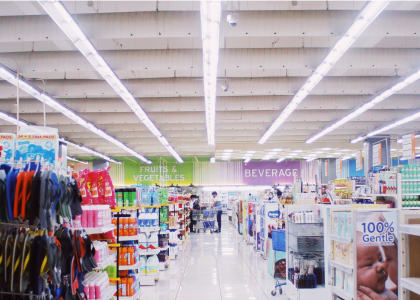
Modern trade refers to organised retail businesses that generally operate through structured purchasing, inventory management, pricing and store management systems.
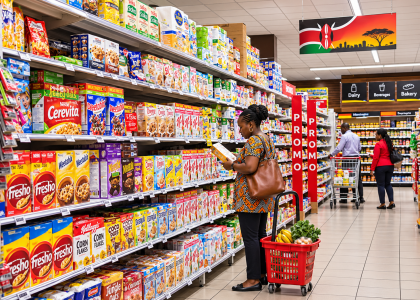
In Kenya, examples include supermarket chains, larger minimarkets and organised retail stores.
These outlets typically have defined product categories, standardised shelving, promotional spaces and established supplier arrangements.
For brands, modern trade offers opportunities to achieve structured product presentation, wider visibility within organised retail environments and access to shoppers in established retail locations.
However, competition for shelf space can be intense. Brands may need to meet specific supplier requirements, negotiate display arrangements and comply with individual retailer merchandising standards.
What Is General Trade?
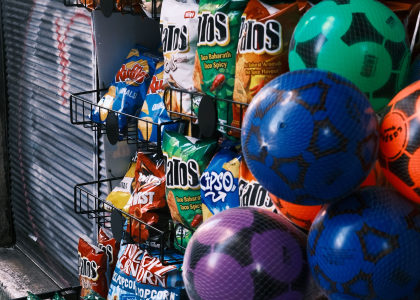
General trade refers to the more traditional and independently operated retail channel. It includes neighbourhood dukas, kiosks, independent shops, small minimarkets, wholesalers and other informal or independently managed outlets.
These businesses play an important role in everyday shopping, particularly where consumers prefer convenient access to products within their neighbourhoods.
Unlike large supermarket chains, many general trade outlets have limited shelf space, different stocking arrangements and less formalised merchandising systems.
For brands, success depends heavily on retailer relationships, practical product presentation, consistent stock availability and the ability to work within each outlet’s limitations.
Modern Trade vs General Trade: Key Merchandising Differences
The main difference is not simply the size of the retail outlet. It is how products are stocked, displayed, managed and sold.
| Merchandising area | Modern trade | General trade |
|---|---|---|
| Shelf space | More structured and categorised | Often limited and shared across product categories |
| Product placement | Guided by store layouts and merchandising standards | Often influenced by retailer preferences and available space |
| Displays | Dedicated promotional stands and display areas may be available | Compact displays and practical counter arrangements are more common |
| Pricing | Often uses standardised shelf labels and pricing systems | Pricing may be communicated through labels, packaging or direct retailer interaction |
| Stock monitoring | May use formal inventory systems | Often relies on retailer records and direct stock checks |
| Promotions | Planned campaigns and in-store promotional arrangements | Retailer incentives, product offers and local activations |
| Merchandising control | More structured and standardised | Requires stronger retailer relationships and field follow-up |
These differences should guide how brands allocate merchandising resources, train field teams and measure retail performance.
How Brands Should Approach Merchandising in Modern Trade
Modern trade requires a more structured merchandising approach because products compete within organised retail environments where shelf positioning, presentation and compliance matter.
1. Prioritise Shelf Positioning and Product Visibility
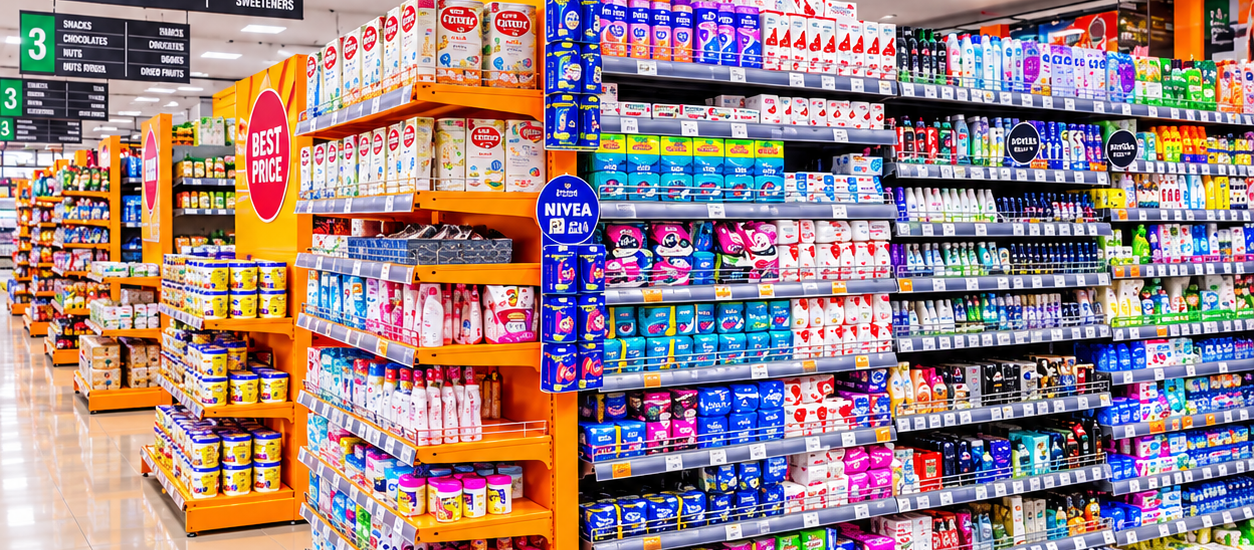
In supermarkets and organised minimarkets, products are usually arranged within defined categories.
Brands should understand where their products belong and how shoppers navigate those sections.
For example, a household cleaning brand should ensure its products are clearly presented within the relevant cleaning category, with appropriate shelf positioning and consistent product facings.
Brands should also monitor competitor placement. If competing products occupy more visible positions or have larger displays, it may affect how easily shoppers notice their products.
The objective is not simply to occupy shelf space but to secure a position that supports product discovery and purchase.
2. Maintain Consistent Product Presentation
Modern retail outlets often have merchandising standards that suppliers are expected to follow.
These may cover product arrangement, shelf labels, display materials, pricing, stock rotation and promotional presentation.
Brands should establish clear merchandising guidelines and ensure field teams understand how products should appear in each outlet.
A consistent presentation helps shoppers recognise the brand and makes it easier to monitor execution across different stores.
3. Use Promotional Displays Strategically
Supermarkets provide opportunities for brands to use additional display areas to attract attention.
Depending on retailer approval and campaign objectives, these may include:
- Promotional display stands.
- Branded shelf strips and wobblers.
- End-of-aisle displays.
- Product demonstration areas.
- Seasonal promotional arrangements.
For example, a beverage company introducing a new product may combine its regular shelf presence with a dedicated promotional display and product sampling.
However, additional displays should be evaluated commercially. A display should support product discovery, trials or purchases rather than simply make the store look more branded.
4. Monitor Stock Availability and Shelf Replenishment
A product may have an excellent shelf position but still lose sales when it is unavailable.
Merchandising teams should regularly check stock levels, identify empty shelf spaces, monitor product rotation and communicate replenishment requirements.
This is particularly important for fast-moving products where delays in restocking can affect availability.
Brands should also coordinate with distributors and retailer teams to ensure that merchandising activities are supported by adequate stock.
5. Track Retailer Compliance and Performance
Modern trade merchandising should be monitored against clearly defined standards.
Brands can assess whether agreed displays are in place, products are correctly positioned, prices are visible and promotional materials are being used as planned.
Regular reporting helps identify stores where execution is strong and those requiring corrective action.
How Brands Should Approach Merchandising in General Trade
General trade requires a different approach. Instead of relying heavily on structured shelf layouts and large promotional displays, brands need practical merchandising solutions that work within smaller and independently managed retail outlets.
1. Build Strong Relationships with Retailers
In general trade, the retailer often has considerable influence over how products are arranged and presented.
A brand may have an attractive display concept, but the shop owner ultimately controls the available space and decides how the shop operates.
Merchandising teams should therefore build productive relationships with retailers, understand their needs and demonstrate how better product presentation can support their business.
Retailers are more likely to cooperate when merchandising arrangements are practical and do not disrupt their daily operations.
2. Maximise Limited Shelf and Counter Space
Many dukas and kiosks have limited space, with several brands competing for visibility.
Merchandising should therefore focus on making products easy to identify and access without overcrowding the outlet.
Depending on the product and retailer’s approval, brands can use:
- Compact branded display units.
- Countertop displays.
- Organised product groupings.
- Clearly visible pricing.
- Practical wall-mounted displays.
- Small promotional materials.
For example, a confectionery brand may benefit from a compact display near the counter, while a household products brand may need a clearly arranged section within the shop.
The best solution is the one that works with the outlet’s available space and shopping patterns.
3. Work with Retailer Preferences and Purchasing Patterns
Unlike large supermarkets, independent shops may have different stocking habits, purchasing frequencies and customer preferences.
Some retailers may prefer smaller product quantities because of limited storage space or cash-flow considerations. Others may prioritise products that sell consistently within their immediate neighbourhood.
Brands should understand these differences before deciding how to merchandise their products.
A product display that requires substantial space or frequent replenishment may not be suitable for every small outlet.
4. Support Retailers with Practical Merchandising Materials
General trade merchandising materials should be affordable, durable and easy to maintain.
Large promotional structures may not be practical in small shops. Compact branding materials, posters, shelf labels and countertop displays may offer a better solution.
The aim is to improve visibility without creating additional work or inconvenience for the retailer.
5. Use Field Teams to Monitor Retail Execution
General trade often requires consistent field engagement because retail conditions vary considerably from one outlet to another.
Sales representatives and merchandisers can help brands monitor:
- Product availability.
- Product placement and presentation.
- Competitor activity.
- Retailer feedback.
- Pricing and promotional communication.
- Stock replenishment requirements.
These observations provide valuable information for improving distribution and merchandising decisions.
What About Open-Air Markets?
Open-air markets deserve particular attention because they do not operate like conventional supermarkets or neighbourhood shops.
In markets across Kenya, including Wakulima Market in Nairobi and other town and neighbourhood trading centres, products may be displayed on stalls, tables, temporary structures or directly within designated trading spaces.
Merchandising in these environments must account for visibility, accessibility, available space, weather exposure where relevant and the practical realities of market operations.
For suitable consumer products, brands can consider:
- Clear and recognisable product branding.
- Organised product arrangements.
- Portable promotional displays.
- Appropriate product demonstrations.
- Clear price communication.
- Engagement with traders and customers.
However, not every product category is suited to every open-air market. Brands should first establish whether their target consumers shop in that environment and whether the product can be stored, displayed and sold appropriately.
The objective is to adapt the merchandising approach to the market rather than forcing a supermarket-style display into an unsuitable setting.
Building One Merchandising Strategy Across Multiple Retail Channels
A common mistake is treating modern trade and general trade as completely separate marketing activities.
Although execution should differ, the overall brand strategy should remain consistent.
A business selling the same product through supermarkets, minimarkets and dukas needs a coordinated approach that protects its brand identity while recognising the different requirements of each channel.
Here are five important considerations.
1. Establish Clear Brand Merchandising Standards
Every brand should have basic merchandising guidelines covering product presentation, brand visibility, pricing communication and display requirements.
These standards provide a common reference for all field teams and retail partners.
However, they should allow flexibility for different outlet types.
For example, a supermarket may use a dedicated display stand while a small duka uses a compact countertop unit. Both can maintain the same brand colours, messaging and product identity.
2. Segment Retail Outlets
Not every outlet deserves the same merchandising investment.
Brands should classify outlets according to factors such as:
- Sales potential.
- Customer traffic.
- Product category relevance.
- Available display space.
- Stocking capacity.
- Strategic importance within the distribution network.
This helps businesses decide where to invest in premium displays, where to use simple merchandising materials and where regular field visits are most valuable.
3. Train Sales Representatives and Merchandisers
A merchandising strategy is only as effective as the people responsible for implementing it.
Sales representatives and merchandisers should understand product positioning, display standards, stock monitoring, retailer engagement and reporting.
They should also know how to identify problems and communicate useful market feedback.
Training helps create consistency, improves field execution and reduces the gap between what a brand plans and what actually happens in retail outlets.
Businesses can strengthen these capabilities through sales and team training solutions.
4. Coordinate Merchandising with Distribution
Merchandising and distribution should not operate independently.
A product needs to be available before a display can generate meaningful sales.
Brands should coordinate stock deliveries, replenishment, outlet coverage and merchandising visits to ensure that products remain available where promotional and display activities are taking place.
A well-executed display with no stock behind it is a wasted opportunity.
5. Measure Performance Across Both Channels
Brands should establish channel-specific performance indicators rather than using identical measures for every outlet.
For modern trade, useful indicators may include shelf compliance, product facings, display execution, stock availability and sales performance.
For general trade, brands may focus on outlet coverage, product availability, retailer participation, display visibility and sales trends.
The information should help management identify which merchandising investments are producing results and where execution needs improvement.
Common Mistakes Brands Make When Merchandising Across Different Retail Channels
Even established brands can lose opportunities through poor merchandising decisions.
Some common mistakes include:
Using one display design everywhere. A large supermarket display may be too expensive or impractical for a small kiosk.
Ignoring traditional retail outlets. Focusing only on major supermarket chains can limit visibility among consumers who regularly shop in neighbourhood stores.
Overlooking retailer relationships. Merchandising arrangements that do not consider the retailer’s needs are difficult to sustain.
Prioritising visibility over availability. A product display cannot deliver meaningful results if stock is consistently unavailable.
Failing to train field teams. Without clear instructions and supervision, merchandising standards can vary significantly across outlets.
Measuring activity instead of results. Counting the number of displays installed is not enough. Brands must understand whether those displays improve availability, visibility and sales performance.
The Right Merchandising Strategy Starts with Understanding the Market
Modern trade and general trade are both important parts of Kenya’s retail landscape, but they require different approaches to product presentation, retailer engagement, field execution and performance monitoring.
Brands that understand these differences can make better merchandising investments, improve product visibility and build stronger relationships with retail partners.
The strongest approach is not to choose between modern trade and general trade. It is to understand the role each channel plays in reaching customers and develop a merchandising strategy that works across both.
Strengthen Your Retail Merchandising Strategy with Brina Solutions
Getting a product into retail outlets is only one part of building a successful brand. Businesses must also ensure that products are visible, available and presented in ways that encourage customers to consider purchasing them.
At Brina Solutions, we help businesses approach market development and brand execution strategically. Our capabilities include product activation, merchandising-related marketing support, sales team training and business advisory.
Whether your brand is targeting supermarket chains, independent minimarkets, neighbourhood dukas or wider retail markets, the focus should be on connecting distribution, visibility and execution.
Do not just put your products on shelves. Give them the visibility and market support they need to compete.
Visit Brina Solutions to discuss your market development and merchandising needs.