Launching a product is the easy part. Getting a skeptical Kenyan shopper to actually pick it up, pay for it, and take it home? That is where most brands bleed out.
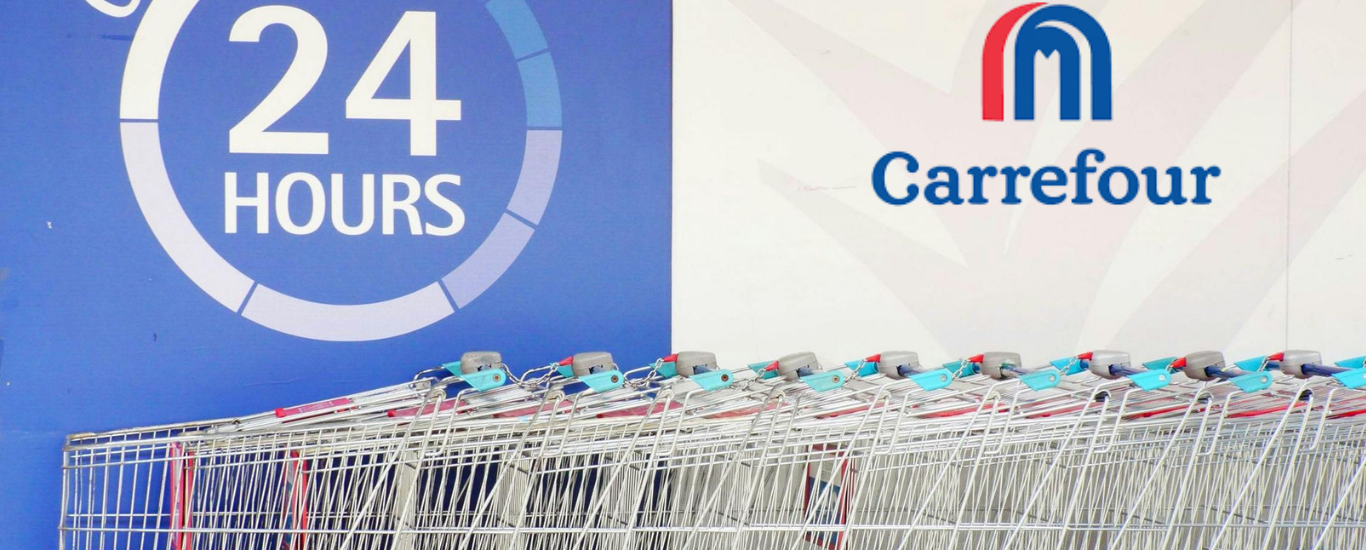
In Kenya’s retail environment, consumers are notoriously cautious. They have seen “fly-by-night” brands appear with flashy billboards only to vanish six months later, leaving no after-sales support. Consequently, they stick to what they know. If your product is sitting on the shelves of Naivas Supermarket, Carrefour Kenya, or Quickmart Supermarket, and shoppers are walking past it like it’s part of the wallpaper, you don’t have a visibility problem.
You have a trust problem.
If you are asking how to get customers to try a new product in Kenya, you need to move beyond “marketing noise.” You need a structured Product Activation strategy that engineers trust at the point of sale.
1. Remove the Risk: The Psychology of the Kenyan “Shilling”
A Kenyan shopper does not walk down an aisle asking, “Is this interesting?” They ask three brutal questions:
- “Will I waste my hard-earned money?”
- “Is this actually better than the brand my mother used?”
- “What if it doesn’t work and I’m stuck with it?”
Trial only happens when the perceived benefit significantly outweighs the perceived risk. In a “Kadogo” economy, every shilling is scrutinized. To lower this barrier, you must deploy risk-mitigation tactics:
- Free Samples: The “taster” that proves the quality.
- Introductory Pricing: A “low-entry” price that makes the risk negligible.
- Small Pack Sizes: Allow them to test the product without committing to a 2kg pack.
- Live Demonstrations: Seeing the product in action removes the “mystery” of how it works.
Global giants like Unilever or P&G rarely rely on shelf presence alone. When they enter a new category, they flood the floor with demonstrators. Why? Because a human interaction converts a skeptic 10x faster than a static poster.
2. Sampling Is Not an Expense; It’s Customer Acquisition
Most Kenyan SMEs treat sampling as a “cost center” to be minimized. This is a fatal strategic error. Sampling is your most effective customer acquisition tool.
In the Kenyan context—especially for food, beverages, and cosmetics in-store sampling drives an immediate sales lift. A trained promoter who can explain the benefits while a customer tastes the juice or feels the lotion removes hesitation instantly. However, random sampling is a waste of money. Effective trial engineering requires:
- Strategic Timing: Activating during end-month paydays or weekends.
- High-Traffic Optimization: Choosing branches where your specific target demographic shops.
- Data Capture: Using the interaction to find out why they like or dislike the product.
Without a structured Product Activation framework, sampling is just expensive theater. With it, it’s a sales engine.
3. The Price Trap: Why Discounts Aren’t Enough
Discounting is the “lazy” way to drive trial. If your only hook is “it’s cheaper,” you are inadvertently telling the customer that your quality is lower.
Trial must be tied to a value proposition. Look at how Safaricom introduces new features. They don’t just drop prices; they show you how the service solves a problem (e.g., M-Pesa’s convenience). Your product must answer: Why should I switch from the brand I already trust? If you cannot articulate that value in one clear sentence, no amount of “Buy 1 Get 1 Free” will build a long-term customer base. If you’re struggling to define this “Reason to Switch,” a Business Advisory session can help you re-align your brand messaging for the local market.
4. Visibility vs. Engagement: Interruption Marketing
End-caps, shelf-talkers, and branded stands increase awareness, but awareness without engagement is passive. Retail is crowded. The average supermarket carries over 20,000 SKUs. Your product must physically interrupt the shopper’s routine.
Tactics that actually drive movement:
- Interception: Promoters positioned 5 feet away from the shelf to guide the shopper.
- Bundle Offers: “Buy the established bread, get the new jam sample free.”
- Eye-Level Negotiation: If you are on the bottom shelf, you are effectively in a graveyard.
Securing the right space is a tactical battle. Our Retail Distribution teams specialize in ensuring that “visibility” actually leads to “velocity.”
5. The “Social Proof” Multiplier
Kenyans are highly influenced by what their peers are doing. If a shopper sees three other people hovering around a tasting station, they are 70% more likely to join in. This is “Social Proof.”
You can accelerate this trust by:
- Influencer In-Store Visits: Having a relatable personality “discover” the product on the shelf.
- Micro-Influencer Sampling: Sending samples to community leaders or estate-based influencers.
- Digital Footprint: Ensuring that when they Google your product while standing in the aisle, they find positive reviews and a professional Digital Marketing presence.
6. Activate Beyond the Supermarket Walls
The retail shelf is passive; activation is active. If your brand only exists inside the four walls of a supermarket, your growth will be linear and slow. To truly get customers to try a new product, you must meet them where they live, work, and commute.
- Estate Pop-ups: Setting up demos in high-density residential areas like Roysambu or Syokimau.
- Corporate Sampling: Reaching professionals in their offices.
- Market-Day Demos: Tapping into the high-velocity “General Trade” markets.
Beverage brands in Kenya are the masters of this. They create a “buzz” in the estates first, making the retail listing an inevitable success because the demand has already been engineered outside. This is a core component of a successful Go-To-Market strategy.
7. The Human Element: Training the “Influencers”
The people on the floor the supermarket attendants and merchandisers are the hidden influencers of the Kenyan retail world. If a shopper asks an attendant, “Is this new detergent any good?” and the attendant says, “I’m not sure, people usually buy the other one,” your sale is dead.
Smart brands:
- Train retail staff on the product’s USPs.
- Provide “Knowledge Sheets” to floor managers.
- Incentivize recommendations through staff-specific competitions.
8. The First Experience: Under-Promise and Over-Deliver
Trial is only the first step. The ultimate goal is Repeat Purchase. If a customer tries your product and it fails to perform, no amount of activation will save you from a “one-and-done” fate.
Before launching a trial campaign, audit your product:
- Is the packaging functional? (Does it leak? Is it easy to open?)
- Does the quality match the hype?
- Is the “Instruction for Use” clear?
Kenyan consumers are value-conscious but quality-obsessed. If the experience exceeds expectations, they become your brand ambassadors. If it fails, they will warn their entire WhatsApp group.
9. Data-Driven Evolution
Guesswork is the fastest way to burn a marketing budget. You must track every activation:
- What was the Conversion Rate (Samples given vs. Units sold)?
- Which Region responded best? (Nairobi vs. Nakuru vs. Mombasa).
- What was the Repeat Rate in the weeks following the activation?
Decisions should be made based on evidence, not “gut feelings.”
The Hard Truth About Trial
If customers are not trying your new product in Kenya, one of three things is true: They don’t see it, they don’t trust it, or they don’t understand why they need it. A simple radio ad or a Facebook post will not fix this. Trial requires physical interaction, human engagement, and a reduction of perceived risk. Without these, your product is just another SKU collecting dust until the retailer eventually delists you.
How Brina Solutions Engineers Trial
At Brina Solutions, we don’t believe in “sitting and waiting.” We believe in Retail Dominance.
- We design Sampling Programs that convert.
- We provide Trained Brand Ambassadors who know how to close a sale.
- We manage the Retail Compliance that keeps you at eye level.
Final Word: Trial Is Engineered, Not Hoped For. If you are serious about breaking into the Kenyan market and making your product a household name, you need more than just a listing. You need a partner who understands the ground-level reality of Kenyan retail.
Book a strategy consultation with Brina Solutions today. Let’s stop the “shelf-walking” and start the “cart-filling.” Build the demand. Reduce the risk. Activate the trial.