Workplace safety in Kenya is not optional. It is a legal requirement under the Occupational Safety and Health Act (OSHA 2007) and a critical pillar of sustainable business operations.
Yet many organizations still treat compliance as a last-minute audit exercise instead of a structured system built on risk assessment and professional training.
If your business has not conducted a proper workplace risk assessment or delivered documented safety training, you are exposed to regulatory penalties, financial losses, and reputational damage.
This guide explains what compliance really requires and how structured corporate training bridges the gap.
What Is Workplace Safety Compliance in Kenya?
Workplace safety compliance refers to adherence to Kenyan occupational health and safety laws, regulations, and industry standards governing employee wellbeing and risk management.
The Directorate of Occupational Safety and Health Services (DOSHS) enforces these standards and has the authority to:
- Inspect workplaces
- Issue improvement notices
- Impose penalties
- Close non-compliant facilities
Under OSHA 2007, employers must:
- Provide a safe working environment
- Conduct risk assessments
- Train employees on safety procedures
- Establish safety committees (where required)
- Report workplace accidents
- Maintain proper compliance documentation
Failure to meet these requirements can result in serious legal and financial consequences.
Why Most Kenyan Businesses Struggle With OSHA Compliance
Let’s be direct.
Most compliance failures are not due to ignorance of the law. They happen because organizations lack structured safety capability.
Common weaknesses include:
- Outdated health and safety policies
- No documented risk assessments
- Inadequate employee safety training
- Weak accident reporting systems
- Poor safety leadership
Compliance is not paperwork. It is operational discipline.
And discipline must be built.
Step 1: Workplace Risk Assessment The Foundation of Compliance
Before implementing training or policies, organizations must conduct a structured risk assessment.
This includes identifying:
- Physical hazards
- Fire and emergency risks
- Machinery and equipment dangers
- Chemical exposure
- Ergonomic risks
- Operational workflow vulnerabilities
Without risk assessment, safety training becomes generic and ineffective.
Risk assessment defines what your organization actually needs not what looks good in a manual.
Step 2: Structured Workplace Safety Training in Kenya
Once risks are identified, training becomes the strategic tool for compliance.
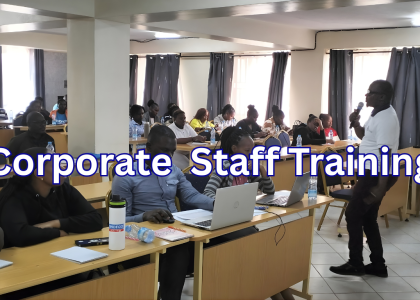
Through our Corporate Training Services, we help organizations:
- Align with OSHA 2007 requirements
- Train safety committees
- Deliver fire safety and emergency response training
- Strengthen incident reporting systems
- Build leadership accountability in safety
- Develop practical compliance documentation
Our approach is not theoretical. It is structured, customized, and aligned with regulatory standards.
Training typically runs 2–5 days depending on scope, risk exposure, and organizational size.
More importantly, it follows a structured process:
- Pre-training evaluation to identify safety gaps
- Customized training design
- Practical implementation sessions
- Compliance documentation guidance
- Post-training advisory support
Without structured training, policies fail at execution level.
Step 3: Facilitating Compliance Implementation
Training alone is not enough.
Organizations must operationalize safety systems by:
- Establishing safety committees
- Assigning accountability roles
- Structuring reporting frameworks
- Documenting procedures properly
- Preparing for DOSHS inspections
We support organizations beyond training by helping them transition from reactive compliance to proactive safety management.
The Business Case for Workplace Safety Compliance in Kenya
Beyond regulatory requirements, effective workplace safety management delivers:
- Reduced accident-related costs
- Lower insurance exposure
- Improved employee morale
- Increased productivity
- Stronger brand credibility
- Competitive advantage in tenders
For businesses working with multinational partners, aligning with ISO 45001 further strengthens operational credibility.
Safety is not a cost center.
It is strategic risk control.
Who Needs Workplace Safety Training?
Workplace safety compliance is critical for:
- Manufacturing companies
- Construction firms
- Logistics and warehousing operations
- Healthcare facilities
- Hospitality establishments
- Corporate offices with 20+ employees
If your organization has not conducted recent safety training or a structured risk assessment, it is time to act.
Why Choose Structured Corporate Training for Compliance?
Many organizations attempt DIY compliance.
That approach usually results in:
- Partial documentation
- Inconsistent implementation
- Weak leadership accountability
- High inspection anxiety
Professional corporate training ensures:
- Regulatory alignment
- Customized safety systems
- Practical documentation
- Measurable compliance outcomes
Learn more about how we deliver structured safety capability development through our Corporate Training Services.
Final Thoughts: Compliance Is Leadership
Workplace safety standards and compliance in Kenya are not administrative tasks.
They are leadership decisions.
Organizations that:
- Conduct structured risk assessments
- Train employees consistently
- Implement safety systems
- Maintain proper documentation
…build resilience, credibility, and long-term sustainability.
If your workplace safety framework is weak, the risk is not theoretical.
It is operational, financial, and legal.
And it can be fixed with the right structure.