Your accounting software doesn’t talk to your inventory system. Your CRM doesn’t sync with your invoicing tool. Without a clear systems integration strategy, this kind of disconnect quietly drains hours from your team every week.
The Hidden Cost of Disconnected Systems
A solid systems integration strategy is one of the most overlooked investments a growing business can make. Most Kenyan SMEs run on a patchwork of tools — one for accounting, another for sales, a third for inventory — each operating in its own silo. Staff end up re-entering the same data three or four times a day, and small errors compound into big problems by month-end.
What Systems Integration Actually Means
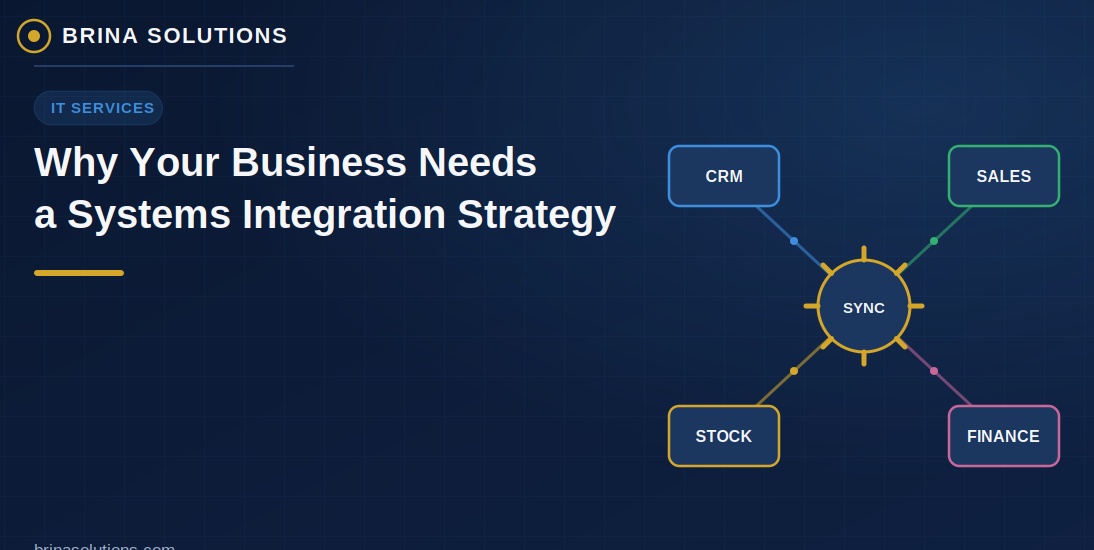
Integration is not about replacing every tool you use. It’s about making the tools you already have talk to each other, so data flows automatically between them. A sale recorded in your point-of-sale system should update inventory, trigger an invoice, and reflect in your financial reports without anyone touching a keyboard twice.
Signs You Need an Integration Strategy
- Staff manually copy data between two or more systems
- Reports from different departments never quite match
- You’ve outgrown spreadsheets but your systems still act like ones
- New hires need days of training just to understand your data flow
Where to Start
Begin with a systems audit: map every tool your business uses and where data moves between them manually. From there, prioritize the highest-friction gaps first — usually finance and inventory, or sales and customer records. Kenya’s ICT Authority offers useful guidance on digital adoption standards for organizations formalizing their systems. For a broader view of how integration fits into wider digital strategy, McKinsey Digital regularly publishes research on enterprise technology trends.
At Brina Solutions, our IT Services team helps businesses design integration strategies that fit their existing tools rather than forcing a costly system overhaul. Ready to stop double-entering data? Get in touch.