Indoor Team Building Activities in Nairobi: Fun Ways to Build Stronger Teams
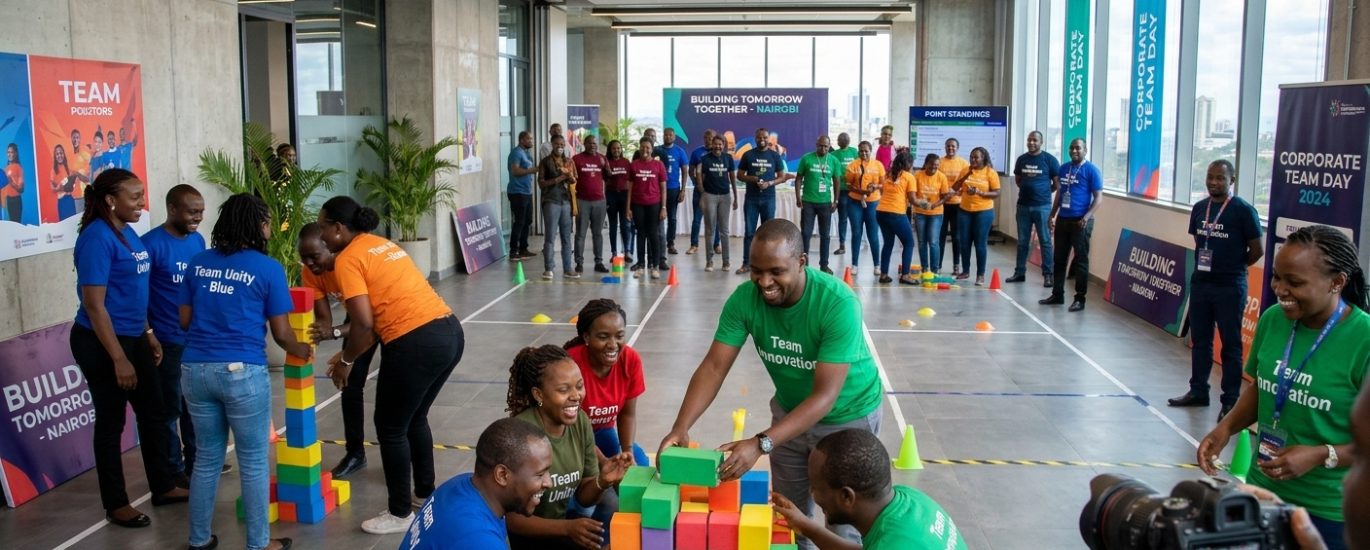
Looking for a way to bring your team together without worrying about the weather? Indoor team building activities in Nairobi offer businesses an opportunity to strengthen relationships, improve communication, develop leadership skills, and create a more connected workforce.
From interactive group challenges to problem-solving games and leadership exercises, indoor team building gives employees a chance to step away from their daily routines, interact with colleagues, and discover better ways to work together.
At Brina Solutions, we believe team building should do more than entertain employees. It should help organizations build trust, improve collaboration, encourage shared responsibility, and strengthen workplace performance. Whether you are planning a corporate retreat, staff engagement event, management session, or employee wellness activity, we help turn team building into a meaningful experience.
Why Choose Indoor Team Building Activities in Nairobi?
Planning a successful corporate event involves more than choosing a venue and bringing employees together. The activities should support your organization’s goals while giving participants an opportunity to connect in a relaxed environment.
Indoor team building offers several advantages for Kenyan businesses.
1. Reliable Activities Regardless of the Weather
Nairobi’s weather can be unpredictable, especially when planning corporate events that depend on outdoor spaces. Rain or excessive heat can disrupt activities and affect employee participation.
Indoor venues provide a practical alternative, allowing teams to participate in planned activities without relying on favourable weather conditions. This makes indoor team building particularly useful for organizations that want a dependable setting for employee engagement, workshops, and corporate retreats.
2. Better Communication and Active Listening
Poor communication can lead to misunderstandings, delays, and unnecessary conflict in the workplace.
Indoor team building activities create opportunities for employees to practise giving instructions, listening carefully, sharing information, and working towards a common objective.
For example, a group communication challenge can reveal how teams respond when instructions are unclear or when different people have competing ideas. These lessons can then be connected to everyday workplace situations.
3. Leadership Development and Shared Responsibility
Leadership is not limited to managers and supervisors. Every employee can contribute ideas, take initiative, and help colleagues achieve shared objectives.
Through structured team challenges, participants can practise decision-making, delegation, problem-solving, and accountability.
At Brina Solutions, we encourage activities that allow different employees to take responsibility, helping organizations recognize leadership potential while strengthening collaboration across departments.
4. Improved Employee Morale and Workplace Relationships
Employees who feel connected to their colleagues are better positioned to build supportive working relationships.
Indoor team building provides an opportunity for staff members to interact outside their usual professional roles. A light-hearted competition, creative group challenge, or collaborative game can help break down communication barriers and encourage employees to appreciate one another’s strengths.
The goal is not simply to make employees happy for a day. It is to create positive experiences that can support healthier working relationships after the event.
7 Indoor Team Building Activities to Try in Nairobi
The most effective activities combine enjoyment with a clear objective. Here are seven indoor team building activities that organizations can incorporate into their next staff engagement event.
1. The Marshmallow Tower Challenge
Divide participants into small groups and provide each team with simple materials such as paper, drinking straws, and tape.
Each group must work together to build a freestanding tower that meets the facilitator’s requirements.
What it develops:
- Creative thinking and innovation.
- Team communication and planning.
- Resource management.
- Collaboration under pressure.
The activity also reveals how teams approach challenges. Do participants plan before acting, listen to different opinions, or rush into decisions without considering alternatives?
These observations can lead to useful discussions about planning and execution in the workplace.
2. The Broken Telephone Challenge
Participants form a line or sit in a circle. The facilitator shares a short message with the first person, who passes it to the next participant until it reaches the final person.
The last participant shares the message with the group, and everyone compares it with the original.
What it develops:
- Active listening.
- Accuracy in communication.
- Attention to detail.
- Awareness of communication breakdowns.
This activity is particularly relevant to organizations where employees rely on instructions passing through several people or departments.
The facilitator can connect the experience to practical workplace issues, including incomplete handovers, unclear instructions, and assumptions that lead to mistakes.
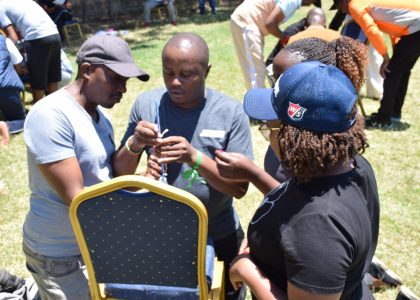
3. The Human Knot Challenge
Participants stand in a circle, reach across, and hold hands with different people before working together to untangle themselves without letting go.
The facilitator should adapt the activity to participants’ mobility, comfort, and physical accessibility.
What it develops:
- Cooperation and patience.
- Problem-solving.
- Communication.
- Trust and collective responsibility.
The challenge encourages participants to listen to one another and recognize that individual actions affect the entire group.
It also creates an opportunity to discuss how teams can overcome difficult situations without blaming one another.
4. The Office Scavenger Hunt
Create a list of clues or objects for teams to identify within a designated indoor space. Participants work together to solve the clues and complete the challenge.
The activity can be adapted to suit an office, conference venue, training room, or corporate retreat location.
What it develops:
- Team coordination.
- Creative problem-solving.
- Delegation and organization.
- Strategic thinking.
The scavenger hunt is especially useful for organizations introducing new employees, bringing departments together, or helping staff members become more familiar with one another.
5. The Silent Line-Up Challenge
Ask participants to arrange themselves in a particular order without speaking. The facilitator can choose criteria such as birth month, alphabetical order of first names, or another suitable category.
Participants must rely on gestures, observation, and non-verbal communication to complete the challenge.
What it develops:
- Non-verbal communication.
- Observation and awareness.
- Adaptability.
- Collaboration.
The activity highlights how people communicate when their usual methods are unavailable. It can also help teams appreciate the importance of paying attention to colleagues rather than assuming everyone understands the message.
6. The Team Problem-Solving Challenge
Present each group with a realistic workplace scenario that requires a collective decision.
For example, a team might need to develop a plan for handling a customer complaint, managing a limited budget, resolving a disagreement, or responding to a sudden operational challenge.
Each group discusses the situation and presents its proposed solution.
What it develops:
- Critical thinking.
- Decision-making.
- Conflict resolution.
- Leadership and accountability.
Unlike games that focus primarily on entertainment, this activity directly connects team building to workplace responsibilities.
It is particularly suitable for management teams, supervisors, customer service departments, and organizations seeking to improve coordination between employees.
7. The Group Rhythm Challenge
Divide participants into groups and ask each team to create a simple rhythm using claps, taps, or other comfortable movements.
The group must coordinate its contributions and perform the rhythm together.
What it develops:
- Synchronization and coordination.
- Creativity and participation.
- Listening and cooperation.
- Team spirit.
This activity creates a relaxed atmosphere and allows employees to participate without needing specialized skills or equipment.
It can also serve as an enjoyable way to bring different departments together and encourage participation from employees who may not usually speak up during formal meetings.
How to Choose the Right Indoor Team Building Activities
Not every activity will produce the same results for every organization. A game that works well for a small, informal team may not be appropriate for a senior management group or a large workforce.
Before selecting your activities, consider the following factors.
Your team’s objectives: Identify what you want to improve. Is the priority communication, leadership, employee motivation, conflict resolution, or collaboration between departments?
The number of participants: Choose activities that allow everyone to contribute. Large groups may require smaller teams, clear instructions, and additional facilitators.
The participants’ needs: Consider employees’ mobility, accessibility requirements, comfort levels, and different personalities. Avoid activities that unnecessarily embarrass participants or exclude people.
The available venue: Check whether the space accommodates group movement, seating arrangements, equipment, and the type of activities planned.
The connection to workplace performance: Select activities that provide useful lessons employees can apply to their responsibilities. Fun is valuable, but the strongest programs connect enjoyment with organizational development.
What Makes a Successful Corporate Team Building Event?
A successful event begins with a clear purpose. Without one, team building can become a collection of unrelated games that employees enjoy but quickly forget.
At Brina Solutions, we encourage organizations to approach team building as an opportunity to address real workplace needs.
Start With Clear Objectives
Identify the challenges your organization wants to address. These might include poor communication between departments, weak coordination, limited employee engagement, or the need to integrate a new management team.
Clear objectives make it easier to select appropriate activities and evaluate their relevance.
Encourage Participation From Everyone
Effective team building should not be dominated by the loudest or most confident employees.
Choose activities that give different participants opportunities to contribute, solve problems, share ideas, and take responsibility.
Facilitators should also create an environment where employees feel comfortable participating without fear of embarrassment or unnecessary competition.
Include Reflection and Discussion
Activities become more valuable when participants understand what they reveal about teamwork.
After a challenge, ask employees what worked, what created difficulties, and what they would change if they repeated the exercise.
Connect their observations to real workplace situations, such as decision-making, communication, leadership, and accountability.
Turn Lessons Into Workplace Actions
The real value of team building appears when employees apply what they learn.
Encourage teams to identify practical actions they can take to improve their working relationships. These might include communicating expectations more clearly, sharing information across departments, or taking greater responsibility for collective results.
Organizations should also review whether these actions are being implemented after the event.
Why Work With Brina Solutions for Indoor Team Building in Nairobi?
At Brina Solutions, we help organizations create team building experiences that combine engagement, learning, and practical workplace development.
We understand that businesses have different objectives, employee needs, group sizes, and budgets. Our approach focuses on selecting suitable activities and creating experiences that support the outcomes your organization wants to achieve.
Our team building programs can focus on:
- Teamwork and Collaboration: Helping employees work together and contribute towards shared objectives.
- Leadership Development: Encouraging initiative, accountability, decision-making, and shared leadership.
- Communication and Trust: Strengthening listening, information sharing, and workplace relationships.
- Employee Wellness: Creating opportunities for connection, positive engagement, and a supportive work environment.
- Organizational Coordination: Helping teams understand their responsibilities and work more effectively across departments.
Whether you are organizing an employee engagement event, a management retreat, or a corporate team building session, we work with you to align the activities with your team’s needs.
We believe the best team building programs do more than bring people together. They help people understand one another, work through challenges, and return to their responsibilities with a stronger appreciation of what they can achieve collectively.
Frequently Asked Questions About Indoor Team Building in Nairobi
What are the best indoor team building activities in Nairobi?
Popular options include communication games, problem-solving challenges, the human knot, group rhythm activities, scavenger hunts, and leadership exercises. The best choice depends on your team’s objectives, group size, venue, and participants’ needs.
Can indoor team building activities accommodate large groups?
Yes. Large groups can participate through smaller teams, rotating activity stations, group competitions, and facilitated challenges. The activities should be selected carefully to ensure that participants remain engaged and everyone has an opportunity to contribute.
Are indoor team building activities suitable for management teams?
Yes. Activities involving strategic decision-making, communication, problem-solving, leadership, and coordination are particularly relevant to management teams. They can help leaders examine how they work together and identify opportunities to improve organizational effectiveness.
How do we choose a suitable indoor team building venue in Nairobi?
Consider the number of participants, accessibility, seating arrangements, available equipment, privacy, location, and the type of activities planned. Conference facilities, hotels, training rooms, and suitable office spaces may all work, depending on the program.
How can we organize an affordable indoor team building event?
Start with clear objectives and prioritize activities that require minimal equipment. Paper-based challenges, communication games, group problem-solving exercises, and creative team competitions can be effective without expensive materials. Choose a venue that fits your budget and avoid paying for facilities your program does not need.
Build a Stronger Team With Brina Solutions
Your employees are one of your organization’s most important resources. Giving them opportunities to communicate, collaborate, solve problems, and develop stronger working relationships can support a healthier and more effective workplace.
With the right indoor team building activities in Nairobi, your next corporate event can become more than a break from the office. It can be an opportunity to strengthen teamwork, encourage leadership, improve communication, and build a more connected workforce.
Ready to plan your next corporate team building event?
Partner with Brina Solutions to create a team building experience aligned with your organization’s objectives, people, and budget.
Contact Brina Solutions
Website: https://brinasolutions.com/
Email: consult@brinasolutions.com
Phone: +254 728 624 200
Let’s build stronger teams and better working relationships.