Best Team Building Activities for Large Groups in Kenya: Ideas for Stronger Teams
Finding the best team building activities for large groups in Kenya requires more than choosing games that entertain employees. The right activities should encourage communication, strengthen collaboration, develop leadership and help people from different departments work better together.
For organizations managing large teams, bringing everyone together can be challenging. Employees may have different responsibilities, communication styles and expectations. A well-planned team building programme creates an opportunity for colleagues to connect, solve problems collectively and build stronger working relationships outside their usual work environment.
At Brina Solutions, we help organizations plan engaging team building experiences that support teamwork, leadership development, communication, trust and employee wellness.
Why Team Building Is Important for Large Groups
As organizations grow, communication gaps can emerge between departments, managers and frontline employees. Team building gives staff an opportunity to interact beyond their normal roles and understand how their individual contributions support shared organizational goals.
When activities are properly selected and facilitated, they can help organizations:
- Improve communication: Encourage employees to listen, share ideas and communicate more clearly.
- Strengthen collaboration: Help teams understand how to combine their skills to achieve common objectives.
- Develop leadership: Give participants opportunities to practise delegation, decision-making and problem-solving.
- Build trust: Create opportunities for employees to rely on one another and appreciate different strengths.
- Support employee wellbeing: Provide a positive environment for connection, recreation and reflection.
- Encourage a shared culture: Bring employees from different departments together around common values and goals.
The value of team building extends beyond the event itself. Organizations can strengthen the impact by discussing lessons learned and identifying practical ways to apply them at work.
Best Team Building Activities for Large Groups in Kenya
The most effective activities depend on your team size, objectives, venue and participants’ abilities. The following ideas can be adapted for corporate organizations, SACCOs, NGOs, schools and other institutions.
1. Team Relay Challenges
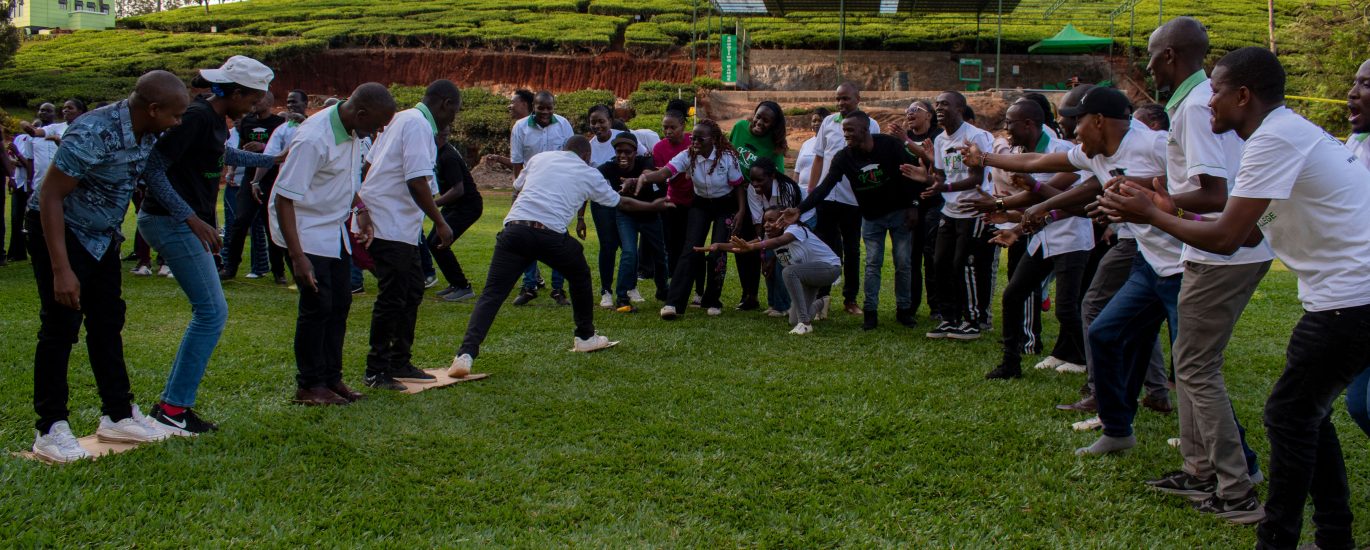
Relay challenges encourage participants to coordinate their efforts toward a common goal. Teams may complete a series of simple physical or problem-solving tasks, with each member contributing to the overall result.
These activities help demonstrate the importance of cooperation, preparation and communication. They are particularly useful when the objective is to encourage participation and create an energetic atmosphere.
Best suited for: Large groups that enjoy active outdoor experiences. Offer alternative roles or low-impact versions so participants with different abilities can take part.
2. Problem-Solving Challenges
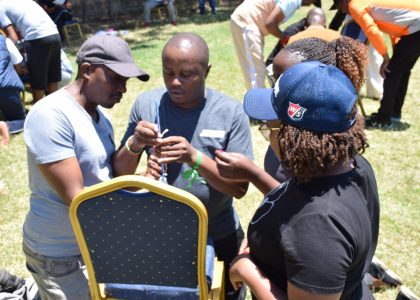
Problem-solving activities require teams to find solutions using limited materials, information or resources. For example, participants might build a free-standing paper structure or develop a strategy to complete a group challenge.
The focus is not simply on which team finishes first. It is also on how members share ideas, manage disagreements, allocate responsibilities and respond when their initial approach fails.
Best suited for: Management teams, project teams and organizations seeking to strengthen critical thinking and collaboration.
3. Communication and Listening Games
Communication challenges show how information can become distorted when people make assumptions or fail to listen carefully. Activities such as drawing from verbal instructions or passing a message through a team can reveal common communication barriers.
A facilitator can then connect the experience to everyday workplace situations, including giving instructions, handling customer requests, reporting problems and coordinating between departments.
Best suited for: Teams experiencing communication gaps, misunderstandings or coordination challenges.
4. Team Quiz and Knowledge Challenges
A team quiz can bring together employees from different departments and encourage them to share knowledge. Questions may cover general knowledge, workplace values, company history or light-hearted topics relevant to the participants.
For large groups, participants can compete in smaller teams, with a facilitator keeping the activity organized and ensuring that everyone has an opportunity to contribute.
Best suited for: Mixed-age groups, indoor events and organizations looking for an inclusive activity with minimal equipment.
5. Trust and Coordination Activities
Trust-based activities help participants practise cooperation, clear instructions and mutual support. Examples include guided navigation challenges, where one participant gives directions while another follows a clearly defined route under safe conditions.
The activity should be designed around participant comfort, accessibility and safety. No one should be pressured to participate in an activity that makes them uncomfortable.
Best suited for: Teams looking to strengthen working relationships, trust and coordination.
6. Group Strategy Challenges
In a group strategy challenge, participants work together to plan and execute a task. Teams may need to organize limited resources, assign responsibilities, develop a solution and adjust their approach as circumstances change.
These activities can reveal how people make decisions, respond to different opinions and coordinate their efforts. They are especially useful for management and leadership groups.
Best suited for: Supervisors, managers, project teams and organizations working to improve decision-making.
7. Creative Team Challenges
Creative activities encourage participants to think differently and combine ideas. Teams might develop a short presentation, create a team identity, design a simple product concept or communicate a solution to a fictional workplace challenge.
These activities give quieter participants opportunities to contribute through planning, writing, design or presentation rather than relying entirely on physical performance.
Best suited for: Diverse teams, staff retreats and organizations that want to encourage innovation and participation.
8. Team-Building Games with Music
Music-based activities can create an energetic atmosphere and encourage people to participate outside their usual workplace roles. Options include rhythm challenges, team chants, musical guessing games and coordinated group performances.
The activities can be adapted to suit the group’s culture, preferred music and comfort levels. The objective is to encourage shared participation rather than embarrass individuals.
Best suited for: Staff celebrations, large employee gatherings and teams looking for a fun, engaging experience.
9. Outdoor Team Challenges
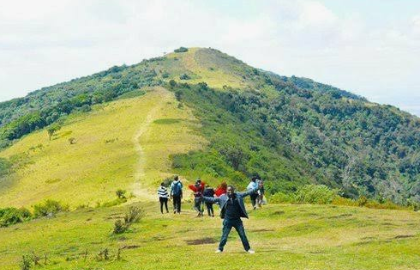
Outdoor activities provide room for movement, group interaction and shared experiences. Depending on the venue and participants, options may include obstacle-style challenges, group missions, scavenger hunts and cooperative games.
For large groups, the facilitator should divide participants into manageable teams, explain the rules clearly and ensure that activities are suitable for the available space and different ability levels.
Best suited for: Corporate retreats, staff wellness events and organizations looking for a change of environment.
10. Workplace Scenario Simulations
Workplace simulations use realistic situations to help employees practise collaboration and decision-making. Teams might respond to a fictional customer complaint, coordinate a project with competing priorities or develop a response to an operational challenge.
After the activity, participants discuss what worked, what could improve and how the lessons apply to their actual responsibilities.
Best suited for: Customer service teams, sales teams, supervisors and organizations seeking a stronger connection between team building and workplace performance.
How to Organize Team Building for a Large Group
Choosing suitable activities is only one part of planning a successful event. The programme also needs to accommodate the number of participants, available facilities and desired outcomes.
Understand the Purpose of the Event
Start by identifying what the organization wants to achieve. Is the priority communication, leadership, trust, employee wellness, departmental collaboration or integration of a new management team?
Clear objectives make it easier to select activities and assess whether the programme was useful.
Divide Participants into Manageable Teams
Large groups can become difficult to coordinate when everyone participates in the same activity at once. Dividing employees into smaller teams allows more people to contribute and gives facilitators better opportunities to observe participation.
Where possible, mix employees from different departments and levels of seniority to encourage interaction beyond established work groups.
Choose a Suitable Venue
The venue should support the planned activities and provide adequate space, seating, sanitation facilities and shelter where necessary. Consider accessibility, transport arrangements, weather conditions and the needs of participants.
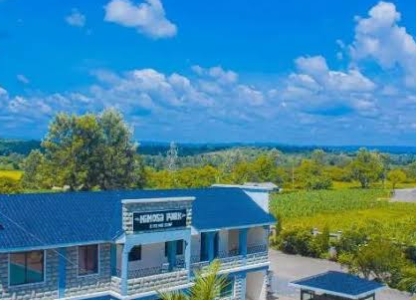
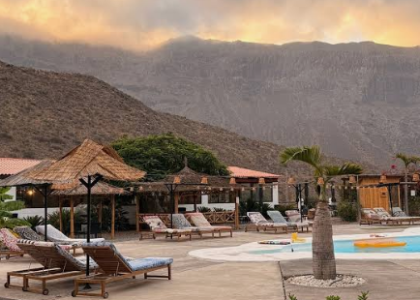
Organizations planning team building in Kenya can explore outdoor recreation facilities, conference venues, hotels and suitable retreat destinations. Confirm current rates, facilities, capacity and availability directly with each venue before making a booking.
Work with an Experienced Facilitator
A skilled facilitator helps explain activities, manage transitions, encourage participation and connect each experience to the organization’s objectives.
For large groups, facilitation arrangements should account for the number of participants, complexity of the activities and need for additional support staff. Clear instructions and appropriate supervision help the programme run smoothly.
Make Participation Inclusive
Not every employee will enjoy competitive sports or physically demanding games. A balanced programme includes activities that test communication, creativity, planning and problem-solving as well as movement.
Provide suitable alternatives, consider accessibility requirements and avoid activities that single out or embarrass participants.
Connect Activities to Workplace Lessons
The learning should not end when a game is completed. Facilitators can ask participants what helped their team succeed, how they handled disagreements and what they would change next time.
These discussions help translate the experience into practical actions, such as clearer communication, improved delegation, better coordination and more constructive teamwork.
Common Mistakes to Avoid When Planning Large Group Team Building
Even an exciting programme can fall short when the planning does not match the needs of the participants.
Avoid these common mistakes:
- Choosing activities without clear objectives: Fun matters, but activities should also serve a purpose.
- Ignoring the group size: An activity that works well for a small team may not engage a much larger group without adjustments.
- Focusing only on competition: Excessive emphasis on winning can discourage participation and cooperation.
- Overlooking safety and accessibility: Activities should suit the venue, weather conditions and abilities of participants.
- Leaving out quieter employees: Use a mix of activities so people can contribute in different ways.
- Skipping the debrief: Without reflection, participants may miss the connection between the activity and their daily work.
How Brina Solutions Can Help
Brina Solutions supports organizations seeking purposeful, engaging team building experiences in Kenya. Our approach combines fun, participation and practical workplace learning to help teams strengthen the way they communicate and work together.
Our team building and corporate training services can support organizational objectives such as:
- Teamwork and collaboration.
- Leadership development.
- Communication and trust.
- Employee wellness.
- Coordination and problem-solving.
We work with organizations to understand their goals and plan a suitable programme around their participants, venue and requirements.
Whether you are organizing a staff event, management retreat, SACCO gathering, NGO programme or school leadership session, the starting point is to identify what your team needs to achieve.
Ready to plan team building for your organization?
Contact Brina Solutions to discuss your requirements and explore a suitable team building programme.
Call: 0728 624 200
Website: https://brinasolutions.com/
Contact us: https://brinasolutions.com/contact-us/
Frequently Asked Questions
What are the best team building activities for large groups in Kenya?
Popular options include relay challenges, problem-solving games, communication exercises, team quizzes, creative challenges, outdoor activities and workplace scenario simulations. The best choice depends on the group’s objectives, size, venue and participants’ abilities.
How do you keep a large team engaged during team building?
Use a variety of activities, divide participants into manageable teams, explain instructions clearly and give everyone meaningful opportunities to contribute. Experienced facilitation and well-planned transitions can also help maintain engagement.
Can team building activities be suitable for different age groups?
Yes. Choose a mix of physical, creative and problem-solving activities, and provide alternatives where needed. Activities should be inclusive and appropriate for the participants rather than assuming everyone has the same interests or physical abilities.
Should team building focus on fun or workplace learning?
A good programme can combine both. Enjoyable activities help people connect, while guided reflection helps participants identify lessons they can apply to communication, teamwork and decision-making at work.
How do we choose a team building provider in Kenya?
Look for a provider that understands your objectives, can adapt activities to your group size, explains its facilitation approach and considers safety, inclusion, venue requirements and your budget. Discuss the expected programme and deliverables before confirming the engagement.