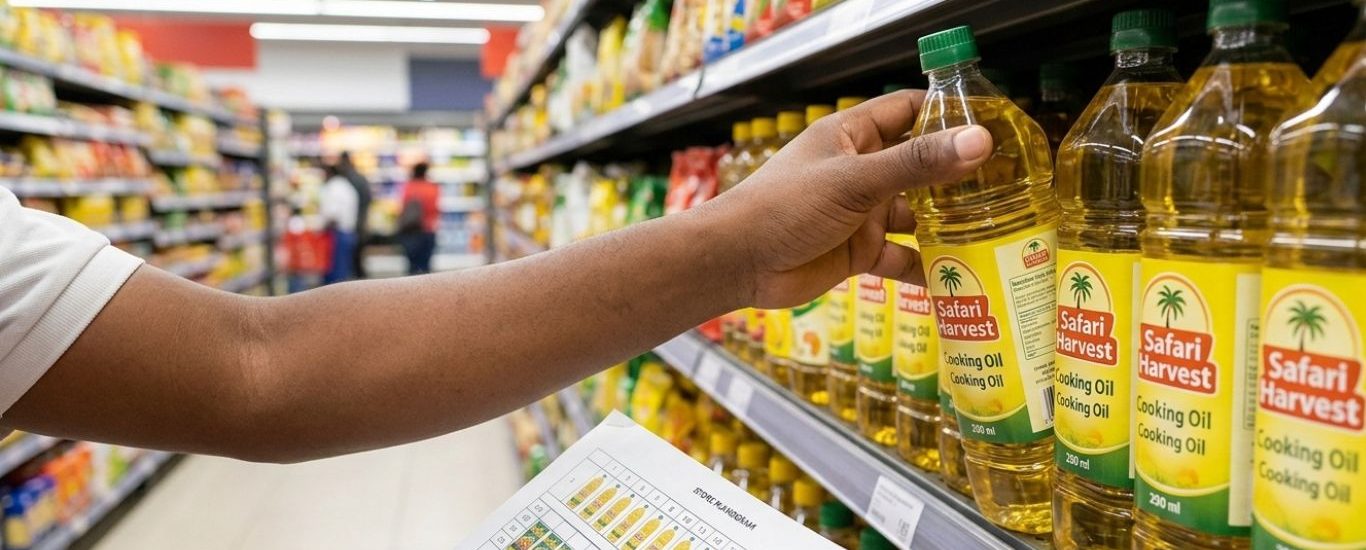
If your product is already in retail and sales are low, here’s the blunt answer: You are not driving demand aggressively enough inside the store.
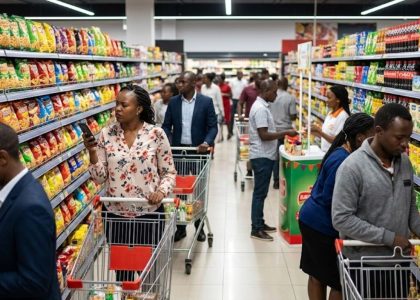
Retailers in Kenya do not sell for you; they allocate space. Performance determines survival. If your SKU does not move in stores like Naivas Supermarket, Carrefour Kenya, Quickmart Supermarket, or Chandarana Foodplus, it gets replaced. So, when you ask, “How do I increase sales of my product in retail stores in Kenya?”, you are really asking: How do I increase velocity, not just supply?
Here is the practical framework that works.
1. Dominate Visibility or Accept Low Sales
Retail is visual competition. If shoppers cannot see you, they cannot choose you. Global brands like Coca-Cola and Unilever invest heavily in in-store dominance branded shelves, end-cap displays, coolers, and point-of-sale materials. They don’t rely on shelf listing alone.
In Kenya, you increase sales by:
- Negotiating eye-level positioning.
- Paying for secondary displays.
- Using wobblers and shelf-talkers.
- Running in-store signage campaigns.
- Deploying trained promoters.
Visibility increases conversion; passive presence does not. If you need structured execution beyond a simple listing, you cannot avoid professional Product Activation Services.
2. Drive Trial Because Shoppers Don’t Gamble
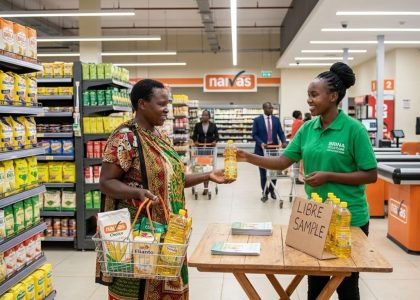
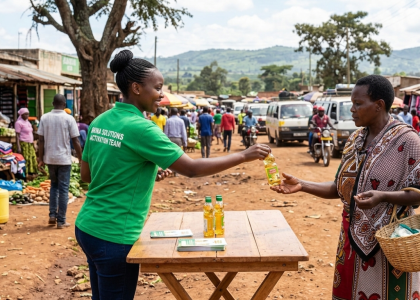
The fastest way to increase retail sales is to increase first-time purchases. Sampling, demonstrations, and experiential campaigns convert curiosity into buying.
When SunKing expanded across East Africa, they didn’t rely on shelf presence alone. They demonstrated products, educated customers, and built trust at the point of sale. Kenyan shoppers are cautious. Trial reduces hesitation. If you are not activating consistently in-store, you are depending on packaging alone and that is rarely enough.
3. Engineer Pricing for Movement, Not Ego
Many manufacturers overprotect margins and underinvest in promotional flexibility. But retail growth in Kenya is promotion-driven. Brands like Bidco Africa and Brookside Dairy maintain pricing models that allow for bundle offers, introductory discounts, and temporary price-offs.
If your pricing structure cannot absorb tactical discounts, your sales curve will flatten. Retailers reward products that move quickly, not products with high theoretical margins. If your margin model is weak, strategic Business Advisory support becomes essential.
4. Control Merchandising Ruthlessly
Here’s a harsh reality: If you are not checking your shelf weekly, your product is losing position. To increase sales, you must:
- Audit shelf placement.
- Monitor stock-outs.
- Ensure price tags are accurate.
- Rotate near-expiry stock.
Retail is dynamic. What you negotiated last month may not hold today. Professional Retail Distribution oversight ensures compliance and execution. No control means no growth.
5. Adapt to Regional Consumer Behavior
Kenya is not one uniform market. Nairobi shoppers may respond to premium packaging and lifestyle positioning, but in Kisumu or Eldoret, value perception may dominate.
To increase sales sustainably, you must test branch-level performance and adjust pack sizes or pricing tiers accordingly. Structured Go-To-Market planning prevents blind expansion. Without data, scaling is just gambling.
6. Make Your Packaging Do the Heavy Lifting
Retail shelves give you seconds. Your packaging must immediately answer: What is the benefit? Why is this different? Why should I pay this price?
Brands like Nestlé and Procter & Gamble succeed because they communicate value instantly. Visibility brings attention, but clear communication closes the sale.
7. Build Promotional Rhythm Not Random Activity
Retail growth is structured. Instead of sporadic promotions, build a launch phase campaign and a quarterly activation calendar. Global disruptors like Beyond Meat didn’t grow by chance; they combined awareness campaigns with retail activations and strong messaging alignment. Consistency compounds.
8. Track Velocity Weekly; Not Quarterly
Retailers analyze performance in “units per store per week.” You should too. If you want to take your growth seriously, start measuring your sell-through rate and promotion lift. Data allows you to adjust quickly; delay kills momentum.
9. Stop Acting Like a Supplier; Start Acting Like a Brand
Suppliers deliver stock; brands create pull. The brands that dominate Kenyan retail combine market research, activation campaigns, and merchandising audits. If you focus only on delivery notes and invoices, you remain replaceable.
The Practical Retail Growth Formula
To increase sales in Kenyan retail stores, you must execute on five fronts simultaneously: Visibility, Trial, Pricing Flexibility, Merchandising Control, and Data-driven Optimization. Miss one, and growth slows. Execute all five, and sales compound.
Why Brina Solutions is Your Strategic Partner
At Brina Solutions, retail growth is not accidental; it is designed. We integrate product activation campaigns, in-store promoter management, and retail compliance systems to ensure your SKU doesn’t just sit on a shelf it moves. We analyze shopper behavior and competitor pressure to execute targeted interventions that increase velocity.
Move Before the Retailer Moves You. Retailers are becoming more data-driven, and underperforming products are removed quickly. The solution is not more stock; it is smarter activation and structured demand creation.
Book a strategy consultation with Brina Solutions today. Increase your velocity. Protect your shelf space. Scale intelligently before your competitor takes your position.