Safari Team Building in Kenya: Best Outdoor Destinations, Activities, Costs and Planning Guide
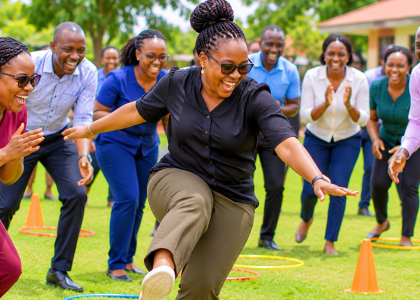
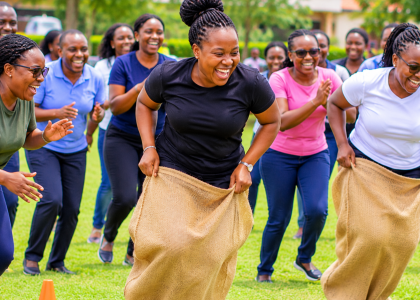
Imagine taking your team away from the usual office environment and bringing them together in a setting surrounded by open landscapes, fresh air and exciting outdoor experiences. Instead of another meeting in a boardroom, your employees get an opportunity to interact, solve challenges, share experiences and build stronger working relationships.
That is the idea behind safari team building.
In Kenya, safari team building can take many forms. It may involve an outdoor corporate programme near Mount Longonot, an adventure experience around Hell’s Gate, a team retreat in Nanyuki, an outdoor event along the Kenyan Coast or a nature-inspired programme in Western Kenya.
One important distinction: safari team building does not necessarily mean going on a wildlife game drive. The focus is on creating a meaningful team experience in an outdoor destination. The activities, facilitation and venue should support the organisation’s objectives.
At Brina Solutions, we help organisations plan and facilitate team-building programmes that bring people together, strengthen workplace relationships and encourage better collaboration. We work with the client’s preferred location, group size, objectives and budget to develop an experience that makes sense.
You choose the destination. We help make the experience meaningful.
Why Choose Safari Team Building for Your Organisation?
An office environment is necessary for getting work done, but it is not always the best environment for employees to connect beyond their daily responsibilities.
Departments can become disconnected. Communication may become limited to emails and instructions. Employees may work together for months without developing a strong understanding of one another.
Taking a team outside the workplace creates an opportunity to change those interactions.
1. Improve communication and collaboration
Outdoor team challenges encourage participants to share information, listen to instructions and work towards a common goal. Employees learn that completing a task successfully often depends on how well they communicate with others.
2. Strengthen workplace relationships
A different environment allows colleagues to interact beyond their usual job titles and responsibilities. Employees get to know one another in a more relaxed setting, which can improve working relationships when they return to the office.
3. Develop leadership and problem-solving skills
Team challenges can reveal how individuals approach decisions, allocate responsibilities and respond when a group encounters difficulties.
A well-designed programme gives participants an opportunity to practise leadership, delegation, decision-making and accountability.
4. Encourage employee engagement
A thoughtfully planned outdoor experience gives employees a break from routine and makes them feel included in the organisation’s activities.
However, the value does not come from travelling to an expensive destination. It comes from creating an experience that employees can participate in and learn from.
5. Support organisational change
Safari team building can be particularly useful after a restructuring, leadership transition, departmental merger or organisational planning exercise.
Activities can be designed around trust, shared responsibility, communication, adaptability and the organisation’s wider goals.
Choosing the Right Safari Team-Building Destination in Kenya
Kenya offers a wide range of outdoor settings, from the Great Rift Valley and Mount Kenya region to the coastal environment, forests and lakeside destinations.
But here is where organisations need to make a smart decision: the best destination is not automatically the furthest, most expensive or most famous location.
A company based in Mombasa should not necessarily plan its team-building event around a destination near Nairobi. Similarly, a Kisumu-based organisation may find it more practical to explore suitable locations within Western Kenya and the surrounding region before considering a long journey to Naivasha.
The starting point should always be the client’s actual location.
Safari team-building destinations by region
The following are destination areas worth exploring. They are starting points for planning, not a guarantee that every location has a suitable corporate venue or the facilities required for every activity.
1. Nairobi, Kiambu and Central Kenya
For organisations based in Nairobi, Kiambu, Thika and surrounding areas, there are several outdoor destinations that can provide a refreshing change of environment without necessarily requiring a long-distance journey.
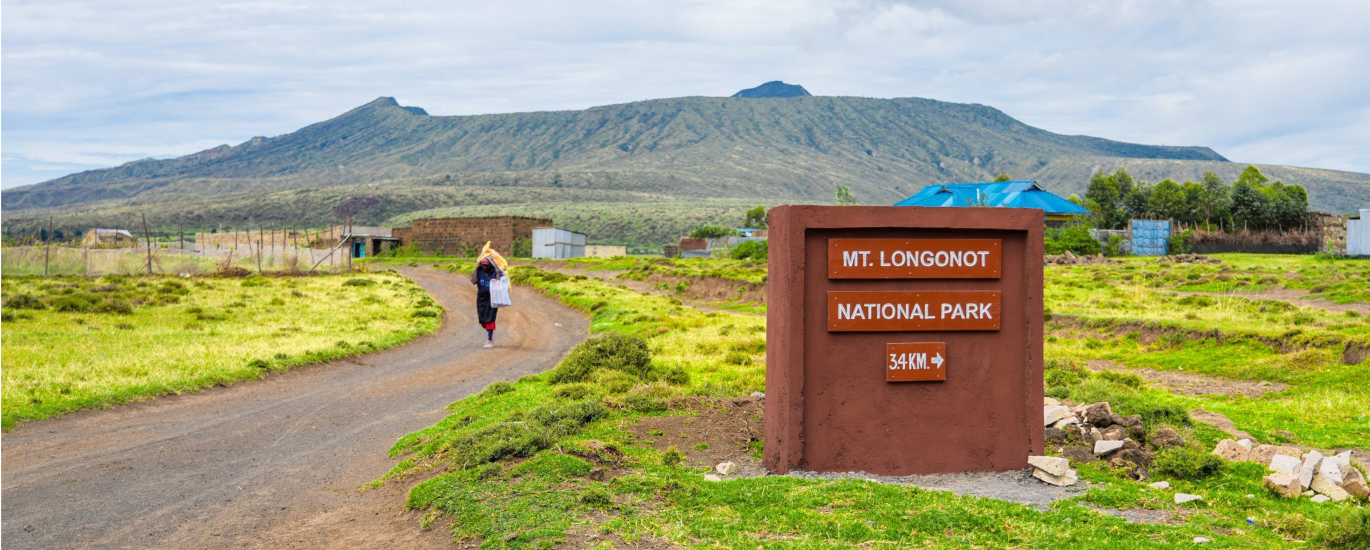
Mount Longonot
Mount Longonot is an attractive option for organisations interested in nature-based adventure and hiking experiences. The landscape offers a distinctive setting for teams looking for an outdoor challenge.
It is important to plan carefully, however. Hiking Mount Longonot is physically demanding and should not automatically be treated as a suitable activity for every employee. Organisations should consider participants’ fitness levels, accessibility needs and alternative activities.
The Kenya Wildlife Service describes the park as an adventure destination with hiking and crater-rim experiences. Its location is approximately 90 kilometres from Nairobi, although the actual journey will depend on the starting point and route.
Hell’s Gate National Park
Hell’s Gate is another strong option for organisations interested in outdoor adventure. Its dramatic landscapes, trails and natural features create opportunities for activities such as hiking and cycling.
It can be considered for groups looking for a more active experience, subject to current park regulations, permissions and appropriate safety arrangements.
The important consideration is that Hell’s Gate is a national park, not a fully equipped corporate event venue. You may need to arrange a separate venue for structured team activities, meals, meetings or overnight accommodation.
Naivasha and Lake Elementaita
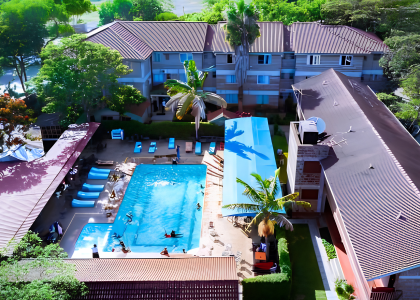
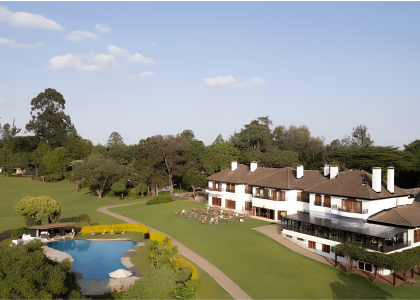
Naivasha is one of the more flexible destination areas for corporate retreats and outdoor team-building programmes. Organisations can explore lakeside hotels, lodges, private grounds and other group-friendly facilities.
Depending on the selected venue, a programme may include:
- Outdoor team challenges and group competitions.
- Leadership and communication exercises.
- Strategy discussions and facilitated workshops.
- Nature-inspired activities.
- Evening social activities for residential groups.
Lake Elementaita is another area worth considering for organisations looking for a quieter retreat environment.
Sagana and the Mount Kenya surroundings
Sagana is particularly attractive for organisations interested in outdoor adventure and group experiences. The wider area has facilities and activity providers that may support different types of corporate programmes.
Nanyuki and the Mount Kenya region are also worth exploring for residential retreats, leadership development and nature-inspired team experiences.
Best suited for: Nairobi and Central Kenya organisations looking for accessible outdoor programmes, adventure experiences, leadership retreats or overnight team-building events.
2. Mombasa, Kilifi and the Coastal Region
For a business based in Mombasa, there is little reason to begin planning from Nairobi. The Coast already offers a variety of coastal, nature-based and outdoor destination options.
The choice depends on whether the organisation wants a convenient day event, a beach-based retreat, a nature experience or a longer adventure programme.
North Coast: Nyali, Bamburi, Shanzu, Watamu and Malindi
The North Coast is a practical starting point for Mombasa-based organisations that want to keep travel arrangements manageable.
There are hotels, resorts and dedicated activity facilities to explore, depending on the group’s size and programme requirements.
Possible programme elements include:
- Beach and outdoor team challenges.
- Communication and problem-solving activities.
- Group competitions and recreational experiences.
- Leadership development sessions.
- Indoor workshops combined with outdoor activities.
For example, Wild Waters in Mombasa publicly advertises corporate team-building facilities that combine land-based and water-based activities. This illustrates the type of dedicated activity venue organisations can investigate when comparing options.
South Coast: Diani and the surrounding area
Diani offers a different atmosphere for organisations looking for a residential team-building experience.
Its coastal environment, resorts and outdoor spaces can support a programme that combines structured team activities with relaxation and group interaction.
A company can consider a one-day event or a longer retreat, depending on its budget, travel arrangements and objectives.
Shimba Hills
Shimba Hills offers a nature-oriented alternative for organisations interested in a quieter outdoor setting.
It is worth exploring for groups that want a change of environment and nature-based experiences. However, a national reserve should not be confused with a dedicated corporate team-building venue. Confirm where structured activities can take place and what permissions or additional arrangements are required.
Tsavo East and Tsavo West
For organisations interested in a more adventurous destination, Tsavo East and Tsavo West are options to investigate.
The distance, accommodation arrangements and transport requirements make these destinations more suitable for carefully planned trips rather than assuming they will work as simple day outings.
A company may need to consider an overnight or multi-day programme, depending on its starting point and selected facility.
Taveta and the Rung’arunga area
For organisations operating around the wider Taita-Taveta region, Taveta and the Rung’arunga area may also be worth exploring when identifying suitable outdoor settings and accommodation options.
The most important step is to establish the exact venue, accessibility, facilities and activity arrangements before confirming the destination.
Best suited for: Mombasa, Kilifi and coastal organisations looking for beach-based programmes, outdoor activities, nature experiences or residential retreats.
3. Kisumu, Western Kenya and the Lake Victoria Region
A company based in Kisumu does not need to travel all the way to Naivasha or Nanyuki to enjoy an outdoor team-building experience.
The Western Kenya and Lake Victoria region offers its own possibilities. The best approach is to identify suitable venues and activities within a reasonable travelling distance of the organisation.
Kisumu and Lake Victoria
Kisumu provides a starting point for organisations looking for lakeside venues, hotels and outdoor spaces.
Depending on the selected facility, a team-building programme can combine structured activities with group discussions, meals and relaxation.
Potential programme elements include:
- Outdoor communication challenges.
- Team competitions and collaborative games.
- Leadership and problem-solving exercises.
- Strategy and planning sessions.
- Group reflection and employee engagement activities.
Kakamega Forest and surrounding areas
Kakamega Forest offers a nature-based setting for organisations interested in an outdoor experience.
Nature walks and guided experiences may form part of a wider programme, subject to the relevant permissions and arrangements. Structured corporate activities may need to take place at a suitable nearby facility rather than inside a protected forest area.
Homa Bay and the wider Lake Victoria region
Homa Bay and other suitable locations around Lake Victoria may offer alternatives for organisations based in the region.
The decision should depend on the availability of accommodation, outdoor grounds, meeting facilities and suitable activity spaces.
Kisii and Kericho
Kisii and Kericho are also worth considering when comparing regional venues. Organisations should assess the actual journey from their offices, the facilities available and whether the destination can support the intended programme.
Best suited for: Kisumu, Kakamega, Homa Bay, Kisii and other Western Kenya organisations looking for regional outdoor retreats and team-building experiences.
4. Nyeri, Nanyuki and the Mount Kenya Region
The Mount Kenya region offers an appealing environment for organisations looking for a retreat away from the usual workplace setting.
Nanyuki, Nyeri and the surrounding areas have a range of accommodation and outdoor facilities that organisations can investigate.
Nanyuki and Laikipia
Nanyuki is a strong option for organisations interested in residential retreats, leadership development and outdoor experiences.
Depending on the venue, a programme can combine structured team-building activities with strategy sessions, group discussions and relaxation.
Nyeri and the Aberdare surroundings
Nyeri and the wider Aberdare region offer another set of possibilities for organisations looking for nature-inspired retreats.
The key is to select a venue with appropriate outdoor grounds, accommodation and facilities for the planned group activities.
Sagana
For teams looking for a more active programme, Sagana is worth considering. Organisations can explore suitable activity providers and venues, then select experiences that match the participants’ abilities and the objectives of the event.
Best suited for: Nyeri, Nanyuki, Meru and Central Kenya organisations looking for residential retreats, leadership development and outdoor adventure.
5. Nakuru and the Wider Rift Valley
Nakuru and the wider Rift Valley provide several options for organisations looking for outdoor experiences without necessarily travelling to the Coast or Mount Kenya region.
Nakuru and Menengai
Organisations can explore suitable hotels, private grounds and outdoor facilities around Nakuru. Menengai Crater may also be considered for nature-based experiences where the activity and access arrangements are appropriate.
Naivasha and Lake Elementaita
For organisations based in Nakuru and surrounding areas, Naivasha and Lake Elementaita may provide additional venue choices, depending on travel distance and budget.
Best suited for: Nakuru, Eldoret and surrounding Rift Valley organisations looking for outdoor activities, residential retreats and regional corporate events.
Safari Team-Building Activities: What Can Your Team Do?
The destination creates the setting, but the activities give the programme its purpose.
A successful safari team-building programme should not be a random collection of games. Each activity should support an organisational objective and give participants an opportunity to practise a useful workplace skill.
At Brina Solutions, we encourage organisations to think about what they want their employees to take away from the experience.
1. Communication and coordination challenges
These activities help participants understand the importance of clear instructions, active listening and sharing information.
Teams may be given a task that requires them to exchange information, agree on a plan and coordinate their efforts.
Workplace connection: Better communication between departments, supervisors and employees.
2. Problem-solving and strategic thinking
Participants work together to solve a challenge using the information and resources available to them.
The activities encourage teams to think critically, consider alternatives and make decisions collectively.
Workplace connection: Better decision-making, innovation and practical problem-solving.
3. Leadership and delegation activities
These activities allow participants to practise assigning responsibilities, guiding colleagues and taking ownership of group outcomes.
They can also help organisations identify areas where leadership and coordination need improvement.
Workplace connection: Stronger leadership, accountability and delegation.
4. Trust and teamwork challenges
These activities encourage employees to support one another and recognise the contribution of every team member.
They should be designed around participation, communication and cooperation rather than unnecessary physical risk.
Workplace connection: Improved trust, collaboration and team cohesion.
5. Creativity and innovation challenges
Teams are presented with a task that encourages them to develop ideas, use available resources and approach a problem differently.
Workplace connection: Greater creativity, adaptability and willingness to explore new approaches.
6. Employee wellness and social interaction
A programme can also include suitable recreational activities, relaxation and informal group interaction.
Not every part of a team-building event needs to be competitive. Some of the most valuable moments happen when employees have an opportunity to connect outside their normal responsibilities.
Workplace connection: Employee engagement, morale and stronger interpersonal relationships.
7. Reflection and action planning
This is one of the most important parts of the programme, yet it is often overlooked.
After activities, participants should have an opportunity to discuss what happened, what they learned and how those lessons apply to their daily work.
For example:
- What helped the team complete the challenge?
- Where did communication break down?
- How were responsibilities shared?
- Did everyone have an opportunity to contribute?
- What can the team improve when they return to work?
Without reflection, a team-building event risks becoming an enjoyable day with little connection to workplace performance.
How to Choose the Right Safari Team-Building Destination
Before settling on a location, organisations should evaluate several practical considerations.
1. Start with your business location
This should be the first consideration, not an afterthought.
A destination that is convenient for one organisation may be expensive and impractical for another.
For example:
- A Nairobi-based business may compare Naivasha, Hell’s Gate, Mount Longonot, Sagana and Nanyuki.
- A Mombasa-based business may compare North Coast venues, Diani, Shimba Hills and suitable options around Tsavo or Taveta.
- A Kisumu-based organisation may first explore Kisumu, Kakamega, Homa Bay and other regional facilities.
The purpose is to avoid unnecessary travel expenses and give participants more time to enjoy the programme.
2. Consider the actual distance and journey
Do not rely only on the distance between two towns.
The actual journey should be calculated from the organisation’s office or agreed pick-up point to the specific venue.
Consider:
- The exact pick-up location.
- Road conditions and route options.
- Expected travel time.
- Number of pick-up points.
- Vehicle capacity.
- Parking and access arrangements.
- Whether the journey requires an overnight stay.
A destination may look affordable until transport and travel time are included in the total cost.
3. Match the destination to your objectives
Different destinations support different experiences.
A company looking for leadership development may prefer a quiet retreat venue with meeting facilities and outdoor grounds.
An organisation looking for high-energy group activities may prefer a dedicated adventure facility.
A company planning employee appreciation may want a more relaxed setting that combines structured activities with social interaction.
The venue should support the programme, not dictate it.
4. Consider your participants
A good programme includes the whole team.
Before selecting physically demanding activities, consider the participants’ ages, fitness levels, accessibility requirements and any relevant health or mobility considerations.
For example, a strenuous hike may be suitable for some participants but exclude others. A better programme may offer alternative activities so that everyone can contribute meaningfully.
5. Confirm venue facilities
A scenic destination is not necessarily a suitable team-building venue.
Before making a booking, establish whether the facility has:
- Adequate outdoor space.
- Appropriate accommodation, if required.
- Clean washrooms.
- Catering or meal arrangements.
- Indoor space for meetings and workshops.
- Parking and vehicle access.
- Reliable communication arrangements.
- Suitable facilities for the group size.
- Appropriate safety and emergency arrangements.
If the activities will take place in a national park, forest or protected area, confirm current access rules, permissions, fees and restrictions with the relevant authority.
6. Decide whether you need a day event or residential retreat
A day programme may be suitable when the destination is relatively accessible and the organisation wants to manage costs.
A residential retreat may make more sense when participants are travelling a considerable distance or when the programme includes leadership discussions, strategy sessions and additional group activities.
The right choice depends on the organisation’s objectives and budget.
How Much Does Safari Team Building Cost in Kenya?
There is no single price for safari team building in Kenya.
The final cost depends on where the organisation is travelling from, the destination selected, the number of participants, the type of venue and the activities included.
Publishing one fixed price for every destination would be misleading. A group travelling from Mombasa to a nearby coastal venue has a very different transport requirement from a group travelling from Kisumu to a residential retreat elsewhere in the country.
Instead, organisations should understand the main cost components before requesting a quotation.
1. Transport costs
Transport is one of the most important budget considerations.
The cost may depend on:
- Distance from the organisation’s location to the venue.
- Number of participants.
- Type and capacity of vehicles.
- Number of pick-up and drop-off points.
- Whether vehicles are required for the entire event.
- Overnight accommodation or driver-related logistics, where applicable.
For a large group, transport arrangements may have a significant impact on the total budget.
2. Venue charges
Different facilities have different pricing structures.
Some charge per participant, while others may charge for use of grounds, meeting rooms or event spaces.
Confirm what is included in the venue quotation. Do not assume that booking accommodation automatically includes access to outdoor activity areas or conference facilities.
3. Meals and refreshments
Depending on the programme, the organisation may need to budget for:
- Breakfast.
- Morning refreshments.
- Lunch.
- Afternoon refreshments.
- Dinner for residential groups.
- Drinking water.
Meal arrangements should also consider dietary requirements and the timing of the programme.
4. Accommodation
If the event involves an overnight stay, accommodation becomes an additional cost.
The final amount will depend on the destination, room type, number of participants and number of nights.
Organisations should confirm room allocation, check-in arrangements and any additional charges before making a commitment.
5. Facilitation and programme design
This is where the value of a professionally facilitated programme becomes important.
Facilitation costs may cover:
- Understanding the organisation’s objectives.
- Designing a customised programme.
- Preparing activities and materials.
- Facilitator and support team arrangements.
- Activity coordination.
- Debriefing and learning sessions.
- Programme documentation, where agreed.
A team-building programme should be designed around what the organisation wants to achieve rather than simply charging for a collection of games.
6. Activity and equipment costs
Some destinations and activities may require additional payments for equipment, guides, access or specialist service providers.
These should be identified early so that the organisation understands the full cost.
7. Park, reserve and destination fees
If the programme includes access to a national park, reserve or other controlled destination, applicable entry fees and activity charges should be confirmed with the relevant authority or service provider.
These charges should not be confused with the cost of hiring a corporate venue or engaging a team-building facilitator.
8. Contingency and additional logistics
A sensible budget should allow for unexpected changes, additional transport requirements or other logistical needs.
The organisation should receive a clear quotation that separates the main cost components and identifies what is included and excluded.
Our recommendation: Compare destinations using the total cost of the experience, not just the advertised venue rate. A cheaper venue that requires significantly more transport may not be the more affordable option.
Planning a Successful Safari Team-Building Event
A good experience begins long before participants arrive at the destination.
The planning process should bring together the organisation’s objectives, the participants’ needs, the selected venue and the programme design.
Step 1: Define what the organisation wants to achieve
Start by identifying the reason for organising the event.
Is the organisation trying to improve communication? Address departmental misunderstandings? Strengthen leadership? Welcome new employees? Improve collaboration after organisational changes?
Clear objectives make it easier to select the right activities and measure the value of the programme.
Step 2: Establish the group size
The number of participants affects transport, accommodation, venue selection, activity design and facilitation arrangements.
A programme for 20 employees may require a different setup from one involving 100 or 300 participants.
Share the expected number of participants early so that the planning can be realistic.
Step 3: Identify the starting location
Confirm the organisation’s office location or agreed pick-up point.
For organisations with employees in different towns or branches, establish whether participants will travel from one central point or whether separate pick-ups are required.
This information is essential when comparing destination costs.
Step 4: Agree on the budget
Determine the total budget and, where useful, the expected cost per participant.
The budget should account for transport, venue, meals, accommodation, facilitation, activities and other logistics.
Being clear about the budget early helps avoid recommending destinations that are attractive but financially impractical.
Step 5: Select the destination and venue
Compare suitable options based on travel convenience, facilities, cost and the programme objectives.
Request information from the venue and confirm the details before making a booking.
Where necessary, arrange a site visit or request current photographs and facility information.
Step 6: Develop the team-building programme
The programme should balance activity, learning and interaction.
A well-designed experience may combine:
- An opening session and programme briefing.
- Team communication and collaboration activities.
- Leadership and problem-solving challenges.
- Group competitions.
- Reflection and debriefing.
- Closing remarks and action commitments.
The specific activities should be selected according to the organisation’s objectives and participant profile.
Step 7: Confirm transport, meals and other logistics
Once the destination is selected, confirm the transport provider, pick-up arrangements, meals, accommodation and any additional service providers.
Participants should receive clear information about the venue, travel arrangements, suitable clothing and anything else they need to prepare.
Step 8: Evaluate the experience
The event should not end when the group leaves the venue.
Organisations should consider collecting feedback and identifying lessons that can be applied at work.
Where appropriate, the facilitator can also provide observations and recommendations based on the agreed programme scope.
Common Mistakes to Avoid When Planning Safari Team Building
Even a beautiful destination cannot compensate for poor planning.
Here are some mistakes organisations should avoid.
Choosing a destination before considering the travel budget
A popular destination may look attractive, but the transport and accommodation costs may make it unsuitable.
Always calculate the full cost from the actual starting location.
Confusing a national park with a corporate event venue
National parks and reserves offer natural scenery and outdoor experiences, but they do not automatically provide the facilities required for a structured corporate programme.
Confirm permissions, activity restrictions, meeting facilities and nearby accommodation.
Planning activities without clear objectives
A programme made up entirely of entertainment may be enjoyable, but it may not address the organisation’s needs.
Activities should have a clear purpose and should be followed by reflection.
Ignoring the needs of some participants
Physically demanding activities should not be imposed on everyone without considering individual capabilities.
Offer suitable alternatives and make participation inclusive.
Leaving transport arrangements until the last minute
Transport affects arrival times, participant comfort and the overall event experience.
Confirm vehicle requirements and pick-up arrangements early.
Failing to confirm what the quotation covers
A low initial quotation may exclude important items such as venue hire, meals, equipment, transport or accommodation.
Ask for a breakdown before approving the budget.
Treating team building as a once-a-year activity with no follow-up
A single event cannot permanently fix communication problems, weak leadership or poor workplace relationships.
The real value comes when the lessons are reinforced through everyday management practices and organisational systems.
Why Work with Brina Solutions for Safari Team Building?
At Brina Solutions, we believe effective team building should be enjoyable, purposeful and relevant to the organisation.
We work with businesses, institutions and corporate teams to develop facilitated experiences that strengthen communication, trust, collaboration and leadership.
Our role is to help you turn a destination into a meaningful team-building experience.
Depending on your requirements, our support can include:
Programme planning and design
We work with your organisation to understand its objectives, participant profile and expectations before developing a suitable programme.
Destination and venue planning support
We help assess destination options based on your location, group size, budget and the type of experience you want. Venue and service arrangements are confirmed with the relevant providers.
Facilitated team-building activities
We facilitate structured activities designed to encourage communication, problem-solving, teamwork, leadership and collaboration.
Corporate training and development
Where the organisation needs more than recreational activities, we can integrate relevant learning sessions around leadership, customer service, communication, teamwork and workplace effectiveness.
Programme evaluation and recommendations
Where included in the engagement, we help capture feedback, observations and practical lessons that the organisation can take back to the workplace.
We do not believe every organisation needs the same programme or the same destination. A successful experience should reflect the people participating and the challenges the organisation wants to address.
Frequently Asked Questions About Safari Team Building in Kenya
What is safari team building?
Safari team building is an outdoor corporate team-building experience organised in a scenic or adventure-oriented destination. It combines facilitated activities, group interaction and, where appropriate, nature-based experiences to strengthen workplace relationships and teamwork.
It does not necessarily involve wildlife game drives.
Which are the best safari team-building destinations in Kenya?
The best destination depends on the organisation’s location, budget, group size and objectives. Options to explore include Mount Longonot, Hell’s Gate, Naivasha, Sagana, Nanyuki, Diani, Shimba Hills, Tsavo and suitable locations around Lake Victoria.
Can a company organise safari team building from Mombasa?
Yes. Mombasa-based organisations can explore options around Nyali, Bamburi, Shanzu, Diani, Shimba Hills, Tsavo and the wider coastal region. The most suitable destination will depend on the group’s requirements and travel budget.
Can we organise team building near Kisumu?
Yes. Organisations based in Kisumu can explore suitable venues around Kisumu and Lake Victoria, as well as options in Kakamega, Homa Bay, Kisii and other nearby areas.
How much does safari team building cost in Kenya?
The cost varies depending on the destination, transport, group size, venue, meals, accommodation, activities and facilitation requirements. A quotation should be prepared using the organisation’s actual starting location and selected venue.
Can we have safari team building without an overnight stay?
Yes. A day programme can work well when the destination is accessible and the activities can be completed within the available time. For longer journeys, a residential programme may be more practical.
Does safari team building have to involve physically demanding activities?
No. Activities can be designed around communication, leadership, problem-solving, collaboration and creativity. Organisations should select activities that allow employees with different abilities and fitness levels to participate.
Does Brina Solutions provide safari tours?
Brina Solutions focuses on corporate team-building facilitation, programme design and related planning support. We are not a wildlife safari operator. Where a programme requires accommodation, transport, venue access or specialist destination services, these arrangements are coordinated with the relevant providers as agreed with the client.
How do we book a safari team-building programme with Brina Solutions?
Start by sharing your organisation’s location, expected number of participants, preferred dates, budget and programme objectives. This information helps us assess suitable destination options and develop a proposal.
Ready to Plan Your Safari Team-Building Experience?
Your team does not have to travel across the country to enjoy a meaningful outdoor experience. The right destination could be a short journey from your office or a carefully planned residential retreat in another region.
What matters is choosing a location that makes logistical and financial sense, then designing a programme that gives your employees a reason to connect, collaborate and grow.
Whether your organisation is based in Nairobi, Mombasa, Kisumu, Nakuru, Eldoret, Nyeri or elsewhere in Kenya, Brina Solutions can help you plan a team-building experience around your location, objectives and budget.
Let’s plan an experience your team will remember for the right reasons.
Brina Solutions
Activate Demand. Train Teams. Fix Execution.
Email: consult@brinasolutions.com
Phone: +254 728 624 200