Team Building Training in Kenya: Build Stronger Teams, Better Results
Strong teams do more than work together. They communicate openly, solve problems, support one another and move towards a shared goal. But what happens when communication breaks down, departments work in isolation, or employees struggle to collaborate?
These challenges can affect productivity, customer service and the overall performance of your organization. Sometimes, the problem is not a lack of talent. It is how that talent works together.
That is where team building training in Kenya comes in.
At Brina Solutions, we help organizations bring their people together through engaging team building experiences that combine practical learning, interactive activities and meaningful conversations. Whether you are leading a small business, managing a corporate team or coordinating a school or SACCO, the right program can help your people work better together.
From outdoor challenges and indoor workshops to leadership development and corporate retreats, this guide explores what team building training involves, its benefits, available programs and how to choose the right solution for your organization.
What Is Team Building Training in Kenya?
Team building training in Kenya is a structured learning experience designed to help employees improve communication, build trust, strengthen relationships and collaborate more effectively.
Unlike an ordinary staff outing, professional team building training goes beyond having fun. Activities are selected to address specific workplace challenges, and facilitators help participants connect what happens during the exercises to their everyday responsibilities.
For example, a group challenge might reveal how employees communicate under pressure. A problem-solving activity might expose gaps in decision-making, delegation or coordination. Through guided reflection, participants can identify what went wrong, what worked and how to improve.
The result is an experience that combines enjoyment with practical lessons employees can apply at work.
Team building training is suitable for:
- Private companies and corporate organizations.
- Schools, colleges and educational institutions.
- SACCOs and financial institutions.
- NGOs and community-based organizations.
- Government agencies and county offices.
- Hospitals and healthcare teams.
- Startups and growing businesses.
- Sales, marketing and customer service teams.
The goal is simple: help people move from working alongside one another to working effectively as one team.
Why Team Building Training Matters for Your Organization
Think about a workplace where employees understand their responsibilities, communicate freely, trust their colleagues and take responsibility for shared results.
Now compare that with a workplace where information is withheld, misunderstandings are common and departments blame one another when things go wrong.
The difference is not always talent or resources. Often, it comes down to teamwork.
Investing in corporate team building training can help address these challenges in several ways.
1. Improve Communication Across Teams
Miscommunication can lead to missed deadlines, duplicated work, unhappy customers and unnecessary frustration.
Team building activities encourage employees to listen carefully, express their ideas clearly and understand different perspectives. Participants also learn how assumptions and unclear instructions can affect group performance.
These lessons are particularly valuable for organizations where several departments must coordinate to deliver results.
2. Build Trust and Stronger Working Relationships
Employees are more likely to collaborate when they trust one another.
Trust-building activities give colleagues opportunities to interact outside their usual roles, recognize one another’s strengths and appreciate different working styles.
This can be particularly useful after organizational changes, the appointment of new managers or the formation of new departments.
3. Strengthen Leadership and Accountability
Good leadership involves more than assigning tasks. It requires clear communication, sound decision-making, delegation and the ability to bring people together around common objectives.
Team building training gives managers and emerging leaders opportunities to practise these skills in interactive settings.
It also encourages employees to take responsibility for their contributions instead of leaving every decision to management.
4. Encourage Problem-Solving and Creativity
Some workplace challenges require employees to think beyond their usual routines.
Group challenges encourage participants to explore different approaches, share ideas and make decisions together. They also demonstrate how different perspectives can help a team find better solutions.
These skills are useful in sales, customer service, operations, project management and other roles where employees must respond to changing circumstances.
5. Reduce Workplace Conflict
Disagreements are inevitable when people have different personalities, priorities and expectations.
The real problem arises when employees cannot resolve those disagreements constructively.
Communication and conflict-resolution exercises help teams recognize misunderstandings, listen to opposing views and approach difficult conversations more productively.
Team building is not a substitute for addressing serious workplace grievances, but it can help establish healthier communication habits.
6. Improve Morale and Employee Engagement
People want to feel that their contributions matter.
When employees have opportunities to connect, contribute ideas and participate in shared experiences, they can develop a stronger sense of belonging.
A well-designed team building program can help refresh working relationships, recognize individual contributions and reinforce a positive organizational culture.
7. Strengthen Collaboration Between Departments
Sales, finance, marketing, human resources and operations may have different responsibilities, but they often depend on one another to deliver results.
When departments operate in isolation, even straightforward tasks can become unnecessarily complicated.
Cross-functional team building activities help employees appreciate how their work affects other teams and why coordination matters.
The important point: team building can support better performance, but it does not automatically fix every workplace problem. For lasting results, activities should address real organizational needs and be followed by practical action.
Types of Team Building Training Programs in Kenya
Not every organization needs the same kind of team building experience. A team struggling with communication may need a different program from a management group preparing to implement a new strategy.
At Brina Solutions, we believe the starting point should be your objectives, team dynamics and budget.
Here are some common approaches to consider.
1. Outdoor Team Building Activities
If your team spends most of its working life behind desks, an outdoor experience can provide a welcome change.
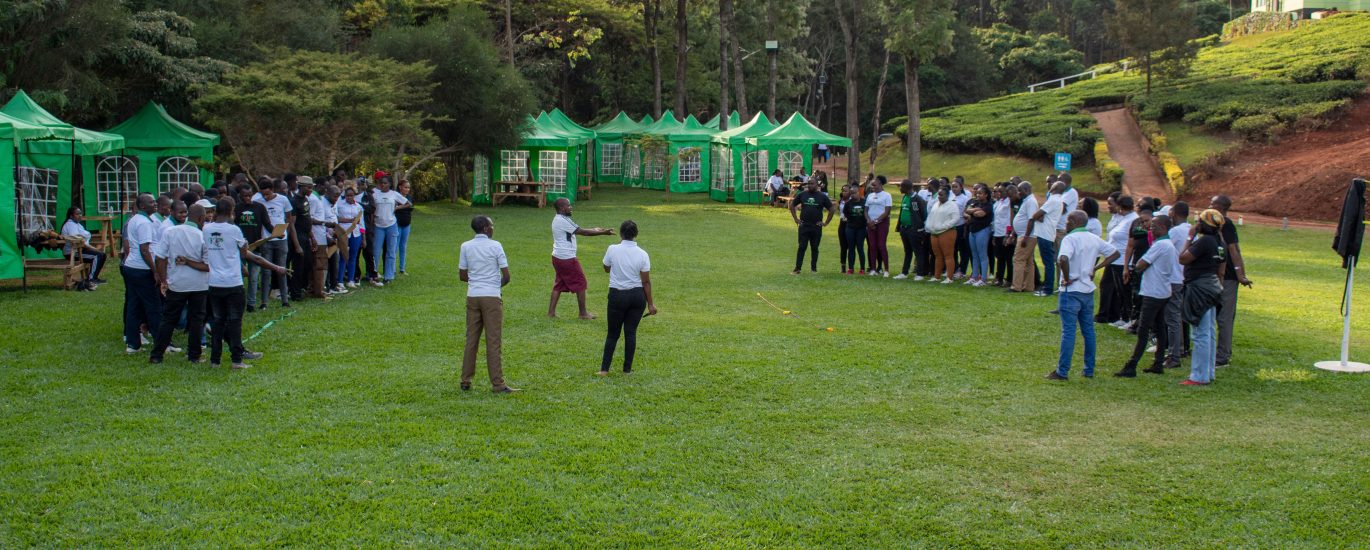
Outdoor team building activities use games, group challenges, problem-solving tasks and collaborative exercises to encourage participation.
Activities can be adapted to the group’s abilities, experience and objectives.
Outdoor programs are particularly suitable for:
- Annual staff events.
- Employee engagement initiatives.
- Departmental retreats.
- Leadership and collaboration exercises.
- Organizations seeking an energetic, interactive experience.
The advantage is that employees get to interact in a different environment while practising communication, cooperation and decision-making.
Explore our team building services to learn how Brina Solutions can help you plan an engaging team experience.
2. Indoor Team Building Workshops
Not every successful team building program requires an outdoor venue.
Indoor workshops can be conducted in boardrooms, conference facilities, training centres or suitable meeting spaces within your organization.
They may include problem-solving games, communication exercises, role-play, group discussions and guided reflection.
Indoor team building is ideal for organizations that prefer a controlled environment, have limited travel budgets or want to combine teamwork activities with professional training.
It can also be a practical option when the main objective is to address communication, leadership or workplace relationships.
3. Leadership and Management Team Building
Managers influence how teams communicate, make decisions and respond to challenges.
When leadership is unclear, employees may become disengaged, responsibilities can overlap and important decisions may be delayed.
Leadership-focused team building helps managers and supervisors examine their leadership styles, improve delegation and understand how their decisions affect the wider team.
Topics may include:
- Leadership and accountability.
- Delegation and decision-making.
- Performance management.
- Communication and feedback.
- Building trust within teams.
- Managing change and organizational transitions.
This approach is particularly valuable for management teams, school leadership, departmental heads and supervisors.
4. Communication and Conflict-Resolution Training
Does your organization experience repeated misunderstandings, unnecessary disagreements or communication gaps between departments?
A communication-focused program helps employees understand how they share information, listen to colleagues and respond to different opinions.
Through practical exercises and guided discussions, participants explore ways to communicate respectfully, clarify expectations and resolve disagreements constructively.
The objective is not to eliminate every disagreement. It is to help people handle differences without undermining teamwork.
5. Trust and Collaboration Programs
Trust is difficult to build when employees rarely interact beyond their immediate responsibilities.
Trust-building programs create opportunities for participants to depend on one another, share responsibilities and work towards common outcomes.
They can be particularly useful following staff restructuring, leadership changes, organizational growth or the formation of new teams.
The activities should be supported by reflection so that participants can identify how trust, reliability and accountability influence their everyday work.
6. Corporate Team Building Retreats
Sometimes, your team needs more than a change of activity. It needs a change of environment.
A corporate retreat allows employees to step away from their usual workplace, connect with colleagues and focus on shared organizational priorities.
Depending on your objectives, a retreat can combine team building activities, leadership discussions, strategic planning and employee engagement.
Popular destinations for corporate retreats include Naivasha, Nanyuki, Nakuru and Kenya’s coastal region.
The right destination depends on your budget, travel arrangements, group size, accessibility and preferred facilities.
At Brina Solutions, we can help you explore suitable venues and develop a program that balances engagement with your organizational goals.
7. Virtual and Hybrid Team Building
Remote work and geographically dispersed teams can make relationship-building more challenging.
Virtual team building uses online games, collaborative tasks, quizzes and facilitated discussions to help employees connect across locations.
Hybrid programs can combine online sessions with in-person activities where practical.
The most effective virtual activities are inclusive, easy to participate in and relevant to the team’s working relationships rather than simply being another online meeting.
8. New Employee Integration and Team Alignment
Bringing new employees into an organization involves more than introducing them to their colleagues.
They need to understand the organization’s culture, expectations, values and ways of working.
Team integration sessions help new employees build relationships, understand their roles and establish connections with existing staff.
They can also help established teams align around new leadership, revised responsibilities or organizational changes.
Popular Team Building Training Topics
A strong team building program should address the challenges your organization actually faces.
Depending on your objectives, training can cover topics such as:
- Effective communication and active listening.
- Trust, collaboration and teamwork.
- Leadership development and accountability.
- Conflict resolution and workplace relationships.
- Problem-solving and creative thinking.
- Emotional intelligence at work.
- Decision-making and delegation.
- Customer service excellence.
- Employee engagement and workplace wellness.
- Change management and organizational culture.
- Goal setting and shared responsibility.
- Interdepartmental coordination.
For example, a customer service team may benefit from communication and collaboration exercises, while a management team may need to focus on leadership, accountability and decision-making.
The best program is not the one with the most activities. It is the one that addresses the right challenges.
Who Needs Team Building Training in Kenya?
Any organization that depends on people working together can benefit from team building.
However, certain situations make it especially valuable.
Corporate Companies
Growing businesses need employees who can coordinate responsibilities, share information and work towards common targets.
Team building can help strengthen relationships across departments and support a more collaborative workplace culture.
Schools and Educational Institutions
Teachers, school administrators, support staff and management teams must coordinate to support learners and maintain effective operations.
Team building can help improve communication, clarify responsibilities and strengthen relationships between staff members.
SACCOs and Financial Institutions
Financial institutions rely on accuracy, customer service, accountability and effective coordination.
Team building programs can help strengthen internal communication, encourage shared responsibility and support better service delivery.
NGOs and Community Organizations
NGOs often coordinate teams with different responsibilities, professional backgrounds and field assignments.
Team building can help improve collaboration, reinforce shared objectives and strengthen relationships between program and support teams.
Hospitals and Healthcare Organizations
Healthcare teams must coordinate responsibilities and communicate clearly to support safe, effective service delivery.
Team building can strengthen professional relationships, communication and collaboration among staff members.
Sales and Customer Service Teams
Sales and customer service professionals often work under pressure while managing customer expectations and performance targets.
Team building activities can help improve coordination, knowledge sharing, problem-solving and mutual support.
Where Can You Hold Team Building Training in Kenya?
Kenya offers a wide range of settings for team building, from convenient urban facilities to outdoor destinations and retreat venues.
Your choice should depend on what you want to achieve rather than simply selecting the most attractive location.
Nairobi and Its Surroundings
Nairobi is a practical choice for organizations seeking accessible conference facilities, hotels and outdoor spaces.
It is particularly suitable for teams that want to minimize travel while bringing employees together from different departments or branches.
Naivasha
Naivasha is popular for corporate retreats because it offers a change of environment, accommodation options and spaces suitable for outdoor activities.
It can work well for organizations that want to combine team building with strategic discussions or staff engagement.
Nanyuki
Nanyuki offers a retreat setting for organizations seeking an environment away from their normal workplace.
It can be considered for management retreats, leadership development and team bonding experiences.
Nakuru
Nakuru provides an alternative for organizations looking for facilities outside Nairobi.
Its suitability depends on the preferred venue, group size, travel arrangements and available activities.
Mombasa and the Kenyan Coast
Mombasa and other coastal destinations are popular for corporate retreats and staff engagement programs.
They can provide opportunities to combine structured team building with a coastal getaway, subject to the organization’s budget and objectives.
How Do You Choose the Right Venue?
Before booking, consider:
- Budget: Account for venue hire, transport, meals, accommodation and facilitation.
- Accessibility: Consider travel distance and the needs of all participants.
- Group size: Ensure the venue can accommodate the group comfortably.
- Amenities: Check meeting spaces, washrooms, catering, parking and other essential facilities.
- Activities: Confirm that the venue supports the activities you intend to conduct.
- Weather and safety: Have appropriate arrangements for outdoor activities and alternative plans where necessary.
Remember, an expensive venue cannot compensate for a poorly planned program. Choose a location that supports your objectives and offers good value for money.
How Does a Professional Team Building Training Program Work?
A successful team building experience requires more than assembling employees and organizing games.
The planning process should connect the activities to specific organizational goals.
Step 1: Identify Your Team’s Needs
The first step is understanding what you want to improve.
Are employees struggling to communicate? Is leadership alignment a concern? Do departments need to collaborate more effectively? Or are you looking to strengthen relationships after organizational changes?
Clear objectives help determine the right approach.
Step 2: Design a Suitable Program
Once the objectives are clear, the program can be developed around your team’s needs, group size, budget and preferred setting.
Activities should be relevant, inclusive and appropriate for the participants.
Step 3: Facilitate Engaging Activities
Participants take part in structured exercises, collaborative challenges and discussions.
A skilled facilitator encourages participation, observes team dynamics and ensures that activities remain connected to the intended learning objectives.
Step 4: Reflect on the Experience
This is where the learning becomes meaningful.
After an activity, participants discuss what happened, how they worked together, what challenges emerged and what they could do differently.
Without this reflection, an enjoyable activity may have little connection to workplace improvement.
Step 5: Agree on Practical Actions
Participants identify specific ways to apply their lessons at work.
These might include clearer communication procedures, improved delegation, better meeting practices or stronger accountability between departments.
Step 6: Review Progress
Managers can review the agreed actions, gather employee feedback and assess whether workplace behaviours are improving.
Follow-up discussions help identify what is working and what requires further attention.
How Much Does Team Building Training Cost in Kenya?
The cost of team building training in Kenya varies depending on the nature and scale of the program.
There is no single price that applies to every organization because the requirements can differ significantly.
Factors that influence the cost include:
- Number of participants: Larger groups may require additional facilitators, materials and logistical arrangements.
- Venue: An in-house session may have different costs from a hotel-based or destination retreat.
- Transport: Travel arrangements can affect the overall budget, especially for destinations outside Nairobi.
- Accommodation and meals: Overnight retreats involve additional expenses.
- Program design: Specialized leadership training or customized workshops may require additional preparation.
- Activities and materials: Some programs require equipment, supplies or additional logistical support.
- Facilitation requirements: The expertise and number of facilitators may influence the quotation.
How Can Your Organization Get Better Value for Money?
Start by identifying what you want the program to achieve.
If your main challenge is communication, you may not need an expensive retreat. A well-designed workshop could be sufficient.
If you are bringing together a large team from several departments, a broader program with outdoor activities and structured reflection may be more appropriate.
The key is to allocate your budget to the elements that support your objectives.
At Brina Solutions, we can help you explore options that suit your group size, preferred venue and budget.
Request a customized team building proposal through our contact page.
How Do You Measure the Results of Team Building Training?
An enjoyable event is a good start, but enjoyment alone does not demonstrate that a team has improved.
To assess the value of your investment, establish clear objectives before the program begins.
You can then evaluate progress through indicators such as:
Employee feedback: Ask participants whether the program addressed their concerns and provided useful lessons.
Communication: Observe whether employees share information more clearly and resolve misunderstandings more effectively.
Collaboration: Assess whether departments coordinate responsibilities and support one another more consistently.
Accountability: Check whether employees understand their roles and follow through on agreed responsibilities.
Workplace relationships: Gather feedback on trust, morale and cooperation among colleagues.
Operational performance: Where appropriate, monitor relevant measures such as project completion, customer complaints or avoidable errors.
Not every improvement will be immediate, and not every result can be attributed to team building alone. However, measuring relevant changes helps management determine whether the program is delivering value and where additional support may be needed.
Why Choose Brina Solutions for Team Building Training in Kenya?
At Brina Solutions, we understand that every organization has its own culture, challenges and objectives.
A team of sales representatives may need stronger collaboration and communication, while a management team may need to improve leadership alignment, accountability and decision-making.
That is why we approach team building as an opportunity to bring people together while addressing practical workplace needs.
Our team building and corporate training services can help organizations develop programs that combine engagement, learning and purposeful interaction.
When you work with Brina Solutions, you can benefit from:
- Customized programs: Activities and discussions aligned with your organization’s objectives.
- Engaging experiences: Interactive exercises designed to encourage participation and collaboration.
- Practical learning: Opportunities to connect team activities with everyday workplace situations.
- Flexible arrangements: Indoor workshops, outdoor team building and retreat-based options, depending on your requirements.
- Venue and planning support: Assistance in exploring suitable options based on your group size, location and budget.
- Business-focused training: A focus on communication, leadership, teamwork and the behaviours that support effective execution.
Our aim is to help your team enjoy the experience while gaining practical insights they can use beyond the event.
Explore our corporate training and business solutions to learn more about how we support organizations in developing their people and improving execution.
Frequently Asked Questions About Team Building Training in Kenya
1. What is team building training?
Team building training is a structured program that helps employees improve communication, trust, collaboration and problem-solving through facilitated activities and discussions.
Unlike a social outing, it includes specific learning objectives and opportunities to apply lessons in the workplace.
2. Why is team building training important for organizations?
It can help improve working relationships, strengthen communication, encourage accountability and support a more collaborative workplace culture.
Its effectiveness depends on whether the program addresses actual organizational needs and whether participants apply what they learn.
3. What is the difference between team building and team building training?
Team building generally focuses on bringing people together and strengthening relationships. Team building training adds structured learning objectives, facilitated reflection and practical lessons linked to workplace performance.
The two can be combined to create an experience that is both enjoyable and purposeful.
4. How much does team building training cost in Kenya?
The cost depends on participant numbers, venue, transport, accommodation, activities and facilitation requirements.
The best way to establish an appropriate budget is to share your group size, objectives, preferred location and available budget with your training provider.
5. Can team building training be conducted at our office?
Yes. Many team building workshops and activities can be conducted in offices, boardrooms or suitable meeting spaces.
An in-house program can reduce travel expenses and may be appropriate for organizations that prefer a convenient setting.
6. Can we organize outdoor team building activities?
Yes. Outdoor programs can include group challenges, problem-solving exercises, communication games and collaborative tasks.
The activities should be selected according to the participants’ abilities, safety requirements, venue and learning objectives.
7. Which organizations can benefit from team building training?
Companies, schools, SACCOs, NGOs, government offices, hospitals, startups and other organizations can benefit.
Any team that depends on effective communication and collaboration may find a tailored program useful.
8. Where are the best team building venues in Kenya?
Suitable venues can be found in Nairobi, Naivasha, Nanyuki, Nakuru, Mombasa and other destinations.
The best option depends on your budget, group size, accessibility requirements, preferred facilities and the type of activities you want to conduct.
9. How do we know whether our team needs training?
Common signs include recurring communication problems, weak collaboration between departments, unclear responsibilities, unresolved workplace disagreements and difficulties aligning employees around shared objectives.
A needs assessment can help establish whether team building training is appropriate or whether other organizational interventions are also required.
10. How do we book team building training with Brina Solutions?
Contact Brina Solutions and share your organization’s objectives, participant numbers, preferred location and budget.
Our team can then discuss suitable options and help you identify an approach that fits your requirements.
Visit our contact page or email consult@brinasolutions.com to get started.
Conclusion: Build a Team That Works Better Together
Your employees may have the right skills, experience and qualifications, but those strengths deliver greater value when people know how to work together.
When communication improves, responsibilities become clearer and colleagues learn to trust one another, the entire organization can benefit.
Team building training in Kenya provides an opportunity to strengthen those working relationships while helping employees develop practical skills in communication, collaboration, leadership and problem-solving.
Whether you are planning an outdoor team building event, an indoor workshop, a leadership retreat or a customized corporate training program, start by identifying what your team needs to improve.
Then choose a program designed to address those needs.
At Brina Solutions, we help organizations bring people together through engaging team building experiences and practical corporate training solutions.
Ready to Build a Stronger Team?
Let’s create a team building experience that goes beyond having fun and helps your people work better together.
Whether you have a small team or a large organization, Brina Solutions can help you explore a suitable program based on your objectives, group size, location and budget.
Contact Brina Solutions today:
- Website: www.brinasolutions.com
- Email: consult@brinasolutions.com
- Phone: +254 728 624 200
- Book a consultation: Schedule a meeting with Brina Solutions
Brina Solutions — Activate Demand. Train Teams. Fix Execution.
Let’s turn teamwork into a stronger foundation for organizational performance.