Fun Team Building Games for Work in Kenya: Activities That Bring Teams Together
Fun team building games for work in Kenya give organisations an opportunity to improve communication, strengthen relationships and encourage employees to work towards shared goals. From friendly group competitions to problem-solving challenges, the right activities can help colleagues connect beyond their everyday responsibilities.
However, effective team building is about more than having fun. When activities are selected with a clear purpose, they can help employees practise communication, develop leadership skills and understand the importance of collaboration in the workplace.
At Brina Solutions, we believe team building should combine enjoyment with meaningful learning. Whether you are planning a staff engagement event, a corporate retreat or an employee development programme, choosing suitable activities can make the experience more valuable for your team.
Why Team Building Games Matter in the Workplace
Every organisation depends on people working together. Yet differences in communication styles, departmental priorities and individual working habits can sometimes make collaboration difficult.
Fun team building games create opportunities for employees to interact in a different setting, solve challenges together and appreciate one another’s contributions.
Here are some of the benefits organisations can gain from well-planned team-building activities.
1. Improving Workplace Communication
Good communication helps employees share information, understand instructions and coordinate their responsibilities.
Games that involve listening, giving directions or exchanging information encourage participants to communicate clearly. These lessons can be especially useful for teams that depend on close coordination between departments.
2. Building Trust Among Colleagues
Trust develops when people feel respected, supported and confident in one another.
Collaborative challenges give employees opportunities to depend on their teammates, share responsibilities and recognise different strengths. Facilitated reflection can help participants connect these experiences to their everyday work.
3. Encouraging Teamwork and Collaboration
Workplace success often depends on employees combining their skills rather than working in isolation.
Group games encourage participants to contribute ideas, listen to others and work towards a common objective. They can also help colleagues understand how individual contributions affect the performance of the wider team.
4. Supporting Employee Morale and Wellness
A change from normal work routines can create opportunities for positive interaction and enjoyment. Shared activities may help employees feel more connected to their colleagues and contribute to a supportive workplace culture.
Team building should complement, rather than replace, broader efforts to address workload, employee wellbeing and workplace concerns.
5. Developing Leadership and Problem-Solving Skills
Some activities require participants to make decisions, organise resources, manage competing ideas and agree on a solution.
These experiences can reveal different leadership strengths and encourage employees to take responsibility, think creatively and learn from one another.
Fun Team Building Games for Work in Kenya
The best activities are easy to understand, inclusive and connected to what your organisation wants to achieve. Here are practical options to consider for your next team-building event.
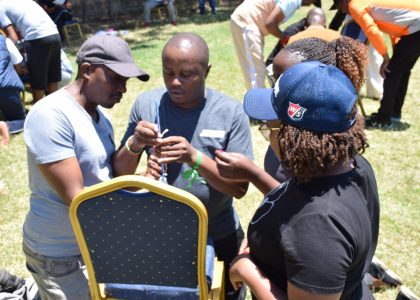
1. The Human Knot
Participants stand in a circle, reach across and hold hands with different people, then work together to untangle the group without letting go.
What it develops: Communication, patience, cooperation and problem-solving.
Best for: Teams that need to practise listening to one another and coordinating their actions.
The facilitator should explain the rules clearly and offer an alternative for participants who find the physical movements uncomfortable.
2. The Blindfold Navigation Challenge
In a suitable open space, participants work in pairs. One person gives clear verbal directions while the other navigates a simple, obstacle-free route with appropriate supervision.
What it develops: Trust, listening, clear instructions and responsibility.
Best for: Exploring how communication affects teamwork.
Participation should be voluntary, with a non-blindfolded alternative available. Avoid hazards and ensure the activity is conducted in a safe environment.
3. The Marshmallow Tower Challenge
Teams receive simple materials, such as paper, tape and marshmallows, and work together to construct a freestanding tower.
What it develops: Creativity, planning, collaboration and decision-making.
Best for: Teams that need to generate ideas, test solutions and learn from setbacks.
The facilitator can encourage participants to reflect on how they shared responsibilities and responded when their first ideas did not work.
4. The Communication Drawing Game
One participant describes a simple picture without showing it to the rest of the group. Teammates follow the instructions and attempt to recreate the drawing.
What it develops: Active listening, clarity, attention to detail and feedback.
Best for: Teams that experience misunderstandings or need to improve how they give and receive instructions.
Comparing the drawings provides a useful starting point for discussing assumptions and the importance of checking understanding.
5. The Paper Tower Challenge
Give each team paper and a limited amount of tape. Ask them to build a freestanding structure that meets the agreed rules.
What it develops: Teamwork, resource management, creativity and problem-solving.
Best for: Departments that need to collaborate, allocate responsibilities and make decisions with limited resources.
The facilitator can assess both the finished structure and how effectively each team worked together.
6. The Team Quiz Challenge
Create a quiz featuring general knowledge, workplace scenarios, Kenyan culture or light questions about the organisation.
Teams work together to agree on their answers rather than relying on a single participant.
What it develops: Collaboration, knowledge sharing, friendly competition and participation.
Best for: Mixed teams looking for an inclusive activity that does not depend on physical ability.
Keep the questions accessible and avoid topics that could embarrass or single out employees.
7. The Shopping List Memory Game
The first participant names an item on a shopping list. Each following participant repeats the previous items and adds another one.
For a Kenyan workplace version, the list could include familiar market items, household essentials or ingredients used in preparing a shared meal.
What it develops: Concentration, listening, memory and group participation.
Best for: Light-hearted staff engagement sessions and groups looking for a simple activity with minimal materials.
8. The River Crossing Challenge
Teams must work out how to move all their members and agreed materials from one side of a designated area to the other using a limited number of safe stepping surfaces, such as paper sheets or floor markers.
What it develops: Planning, coordination, resource sharing and collective decision-making.
Best for: Teams that need to solve a shared challenge while considering everyone’s contribution.
The activity should use a flat, safe surface and must not involve actual water crossings or unstable equipment.
How to Choose the Right Team Building Games
Not every activity is suitable for every group. The best choice depends on your objectives, participants and available setting.
Consider the following factors before making your selection.
- Your objectives: Choose communication games for listening challenges, problem-solving games for collaboration and leadership exercises for decision-making.
- Team size: Select activities that allow everyone to participate rather than leaving some employees watching from the sidelines.
- Physical ability and comfort: Provide alternatives for activities involving running, balance, blindfolds or physical contact.
- Available resources: Many effective activities use simple materials, while adventure-based experiences may require specialist equipment and trained facilitators.
- Facilitation: Ensure someone explains the rules, manages participation and connects the activity to the intended workplace lesson.
- Inclusivity: Avoid games that embarrass employees, expose personal information or rely on stereotypes and unwanted physical contact.
How to Make Team Building More Effective
A fun activity can create a positive experience, but the learning becomes more useful when participants understand how it applies to their work.
Start with a Clear Objective
Identify what the organisation wants to improve. This could be communication between departments, trust among colleagues, leadership, accountability or general employee engagement.
Use these objectives to guide the selection of activities.
Encourage Everyone to Participate
Create a welcoming environment where employees can contribute in different ways. Some participants may prefer leading a discussion, developing a strategy or helping the group organise its ideas rather than taking part in physically demanding games.
Include a Reflection Session
After an activity, invite participants to discuss what worked, what challenged them and how they can apply the experience at work.
Questions such as How did the team make decisions? and What could we do differently when working together? can help turn a game into a meaningful learning experience.
Connect the Lessons to Everyday Work
Encourage employees to identify practical actions they can take after the event. These might include improving information sharing, clarifying responsibilities, listening more carefully or involving colleagues earlier in decisions.
The aim is to carry the lessons beyond the team-building event.
Why Choose Brina Solutions for Team Building in Kenya?
Brina Solutions supports organisations through team-building and corporate training experiences designed around workplace needs and employee development objectives.
Our approach brings together engaging activities and practical learning themes, including:
- Teamwork and collaboration to encourage employees to work towards shared goals.
- Leadership development to strengthen decision-making and accountability.
- Communication and trust to improve understanding and working relationships.
- Employee wellness to encourage positive connections and a supportive team culture.
Whether you are planning an activity for a small department or a wider staff group, the programme should reflect your objectives, available budget and participants’ needs.
Bring Your Team Together with Brina Solutions
The best fun team building games for work in Kenya are those that allow employees to enjoy themselves while practising skills they can use in the workplace.
From communication drawing games and team quizzes to collaborative building challenges, the right activities can encourage participation, strengthen relationships and help teams work better together.
Planning a team-building event for your organisation?
Contact Brina Solutions to discuss your team’s needs and explore a suitable team-building or corporate training experience.
Call: 0728 624 200
Website: https://brinasolutions.com/
Contact us: https://brinasolutions.com/contact-us/