Half-Day Team Building in Kenya: A Practical Guide for Busy Teams
Does your team need time to reconnect, improve communication and strengthen collaboration, but your work schedule leaves little room for a full-day retreat?
Half-day team building in Kenya offers organizations a practical way to bring employees together for focused activities without taking them away from their responsibilities for an entire day.
Whether you are a small business, a growing company, an NGO or an established organization, a well-planned half-day session can create opportunities for employees to interact, solve problems together and reflect on how they work as a team.
At Brina Solutions, we believe effective team building is not about how long an event lasts. It is about choosing the right activities, setting clear objectives and helping participants connect the experience to their everyday work.
Why Choose Half-Day Team Building in Kenya?
Not every organization can set aside an entire day for team development. Customer-facing teams, sales departments, operations staff and busy management teams may need a more flexible approach.
A half-day programme offers several practical advantages.
1. It Fits Busy Work Schedules
A half-day event allows organizations to plan team building around existing work commitments.
For example, a company may schedule a morning session followed by lunch, or an afternoon programme after essential operations have been covered. This can make it easier to coordinate participation while limiting disruption to daily activities.
The schedule should still allow enough time for the activities, breaks and closing discussion rather than squeezing too much into a short period.
2. It Helps Control Event Costs
Shorter events can reduce some expenses associated with full-day or overnight retreats, particularly accommodation and additional meals.
Organizations can consider using a nearby venue, company grounds or a suitable outdoor space to manage costs further.
However, the final budget will depend on factors such as the number of participants, facilitator fees, venue charges, transport, refreshments and materials required.
3. It Creates Opportunities for Better Teamwork
A focused session can give employees a chance to step outside their normal roles and work together on shared challenges.
Activities involving communication, coordination and problem-solving can help participants recognize the importance of listening, sharing ideas and supporting colleagues.
The facilitator’s debrief is particularly important because it connects the lessons from each activity to real workplace situations.
4. It Supports Employee Engagement
Employees often interact differently when they are not focused on their usual tasks and deadlines.
A well-designed team building session creates space for colleagues to connect, participate in enjoyable activities and appreciate one another’s contributions.
To make the experience worthwhile, select activities that are inclusive and suitable for the team rather than relying entirely on competition or physically demanding games.
5. It Can Address Specific Workplace Challenges
A half-day programme works best when it has a clear purpose.
For example, a team experiencing communication challenges may benefit from listening exercises and collaborative tasks. A group adjusting to new leadership may need activities that focus on trust, coordination and shared responsibility.
A focused programme can address one or two priorities without trying to cover every aspect of team development in a single session.
Best Half-Day Team Building Activities in Kenya
The right activities depend on your team size, venue, available time and objectives. Here are some practical ideas to consider.
1. Icebreakers and Team Introductions
Start with short activities that help participants feel comfortable and ready to engage.
These might include name games, team identity challenges or simple questions that encourage colleagues to learn something new about one another.
Icebreakers are especially useful when teams include new employees or colleagues who rarely work together.
2. Communication Challenges
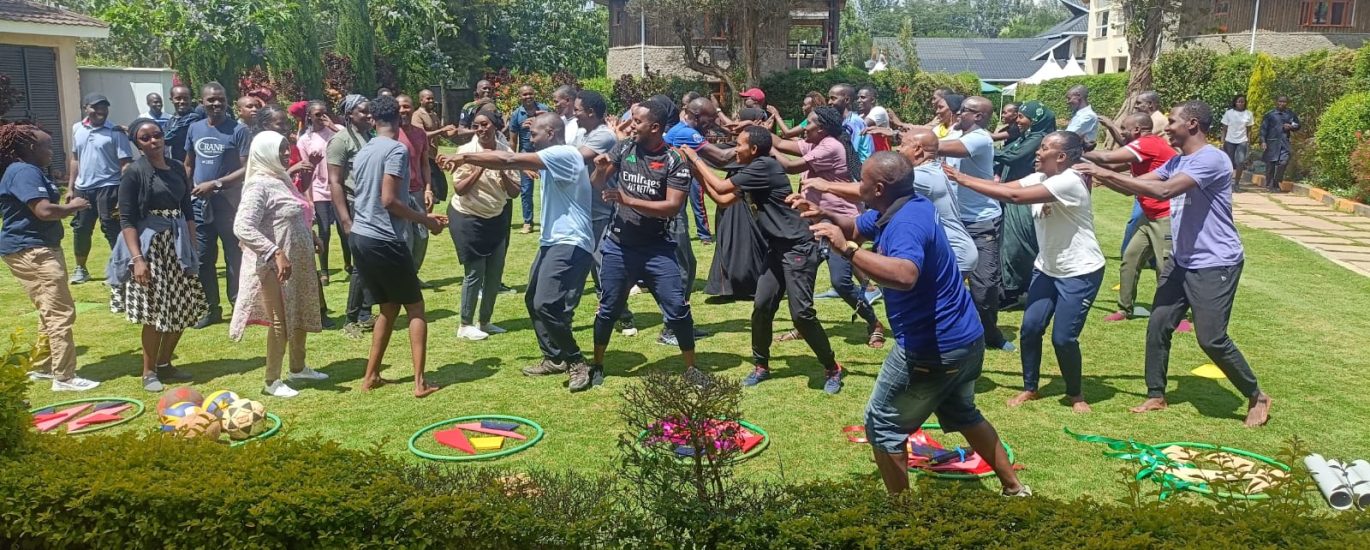
Communication activities require participants to share information, give instructions and listen carefully to complete a task.
For example, one participant can describe a simple arrangement while teammates recreate it using basic materials. The facilitator can then discuss what made the instructions clear or confusing.
These exercises can help teams reflect on how they communicate during meetings, handovers and collaborative projects.
3. Problem-Solving Challenges
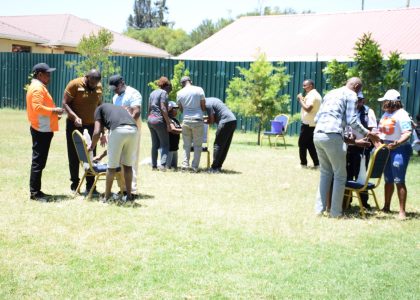
Divide participants into small groups and give each group a task to complete within a set time.
The challenge could involve building a simple structure, solving a puzzle or developing a solution to a realistic workplace scenario.
Afterwards, discuss how the group planned, allocated responsibilities, handled different opinions and reached a decision.
4. Leadership and Delegation Exercises
Leadership activities allow participants to practise decision-making, delegation and coordination.
Assign different roles during a group challenge so that several people have an opportunity to lead. This helps teams explore how leadership can be shared and why clear responsibilities matter.
These exercises can be particularly useful for supervisors, department heads and teams working through organizational changes.
5. Relay Games and Team Challenges
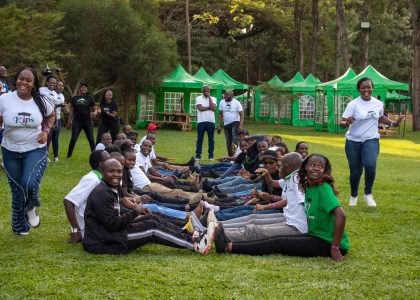
Simple relay activities can introduce movement, friendly competition and opportunities for coordination.
Choose tasks that are appropriate for participants’ abilities and the available space. Provide alternative ways to participate where necessary so that everyone can contribute.
The objective should be teamwork rather than physical performance alone.
6. Team Reflection and Action Planning
A strong half-day session should end with a short reflection.
Ask participants what they learned, which behaviours helped the group succeed and what they would change when working together again.
Conclude by identifying one or two practical actions the team can apply at work. This helps turn the experience into a useful development opportunity.
Sample Half-Day Team Building Programme
A four-hour session can accommodate several activities, provided the programme is realistic and includes time for transitions and breaks.
Here is an example schedule that can be adjusted to your team’s needs.
| Time | Activity | Purpose |
|---|---|---|
| 8:30–8:50 a.m. | Welcome and icebreakers | Build comfort and participation |
| 8:50–9:30 a.m. | Communication challenge | Practise clear communication |
| 9:30–9:40 a.m. | Short break | Allow participants to recharge |
| 9:40–10:25 a.m. | Team problem-solving challenge | Develop coordination and decision-making |
| 10:25–11:10 a.m. | Leadership or group challenge | Explore delegation and shared responsibility |
| 11:10–11:30 a.m. | Debrief and action planning | Connect lessons to the workplace |
| 11:30 a.m.–12:30 p.m. | Lunch or informal networking | Allow time for connection |
This sample includes a one-hour lunch after the core four-hour programme. Adjust the start and finish times to match your preferred event duration and whether meals are included.
Where Can You Hold Half-Day Team Building in Kenya?
You do not always need a distant destination to organize an engaging team building event. The most suitable venue is one that supports your activities, accommodates your group and fits your budget.
Nairobi and Its Surroundings
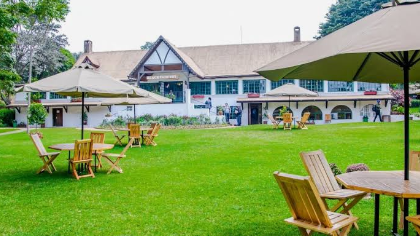
Organizations based in Nairobi can consider suitable hotels, conference facilities, outdoor venues or company premises.
A nearby location may help reduce transport costs and travel time, making it easier to fit the programme into a busy working day.
Naivasha
Naivasha may suit organizations that want a change of environment while keeping the event within a manageable travel distance from Nairobi.
For a half-day programme, however, consider whether the travel time makes sense for your schedule. A nearby venue may be more practical if the goal is to complete the session and return to work on the same day.
Other Locations Across Kenya
Companies outside Nairobi can use suitable local venues, hotel facilities, recreational spaces or their own premises where appropriate.
Before confirming a location, check activity space, accessibility, weather alternatives, parking, washrooms and any restrictions on group activities.
Planning tip: Confirm venue availability, current prices and facilities directly with the property before booking.
How Much Does Half-Day Team Building Cost in Kenya?
The cost of half-day team building varies depending on the size of the group, location, activities and level of facilitation required.
Rather than assuming that every provider offers the same package, request a quotation based on your specific needs.
When preparing your budget, consider:
- Facilitation: The cost of planning and leading the session.
- Venue: Space hire, if required.
- Transport: Travel to and from the event location.
- Materials: Equipment and supplies for the activities.
- Refreshments and meals: Depending on the duration and arrangements.
- Additional requirements: Such as audiovisual equipment or specialized activities.
To keep costs manageable, choose a convenient venue, prioritize activities that address your objectives and request an itemized quotation.
Remember that the cheapest option is not automatically the best value. The programme should still be well organized, inclusive and relevant to your team’s needs.
How to Make Your Half-Day Team Building Session Successful
A shorter programme requires careful planning to ensure that participants get value from the available time.
1. Set clear objectives. Identify what you want to achieve, such as better communication, stronger teamwork or improved coordination.
2. Understand your participants. Consider group size, job roles, accessibility needs and the team’s existing challenges.
3. Choose a suitable venue. Select a location that is easy to access and appropriate for the planned activities.
4. Keep the programme focused. Prioritize a few meaningful activities instead of trying to fit too many exercises into the schedule.
5. Allow time for reflection. Use the closing discussion to identify lessons and agree on practical actions.
6. Follow up after the event. Encourage managers and team members to apply the lessons during meetings, projects and daily collaboration.
Half-Day Team Building With Brina Solutions
At Brina Solutions, we support organizations through team building and corporate training experiences focused on practical workplace development.
Our team development focus areas include:
- Teamwork and collaboration: Helping employees coordinate their efforts towards shared goals.
- Communication and trust: Encouraging active listening, clear instructions and constructive interaction.
- Leadership development: Exploring delegation, accountability and decision-making.
- Employee wellness: Incorporating appropriate activities that support positive workplace relationships.
- Corporate training: Aligning learning sessions with practical employee and management development needs.
Whether you are planning a short staff engagement session or a broader corporate team building programme, start with your objectives, group size, preferred location and budget.
These details help establish a practical foundation for choosing activities and organizing an event that works for your team.
Plan Your Half-Day Team Building Event in Kenya
A busy work schedule does not mean your team has to miss out on opportunities to connect and develop together.
With clear objectives, suitable activities and thoughtful planning, a half-day team building session can create space for employees to strengthen working relationships and reflect on how they collaborate.
Ready to organize a team building session for your staff?
Contact Brina Solutions to discuss your team building and corporate training needs.
- Call: 0728 624 200
- Website: https://brinasolutions.com/
- Contact page: https://brinasolutions.com/contact-us/
Let’s plan a focused team building experience that respects your schedule and supports your team’s development.